Insights


The Camera Upgrade Question Facing School Security Teams
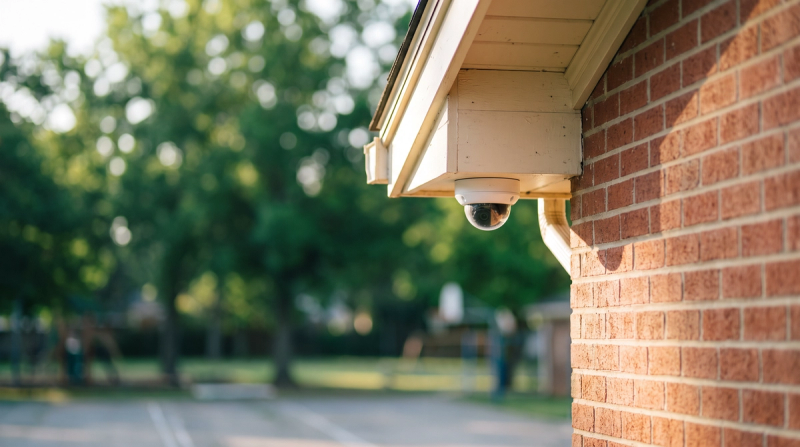
Your Dahua cameras may be aging. Perhaps they're missing the latest analytics features advertised by newer models. The natural instinct is to start shopping for replacements.
Before you request quotes for new hardware, consider what those cameras actually need to become more effective. The cameras themselves capture video perfectly well. What they lack is intelligence: the ability to understand what they're seeing and alert your team when something requires immediate attention.
This distinction matters enormously for school budgets. Hardware replacement projects routinely exceed $200,000 for medium-sized schools. The installation process disrupts daily operations for weeks. And after all that expense and inconvenience, you still have cameras that require someone to watch them constantly.
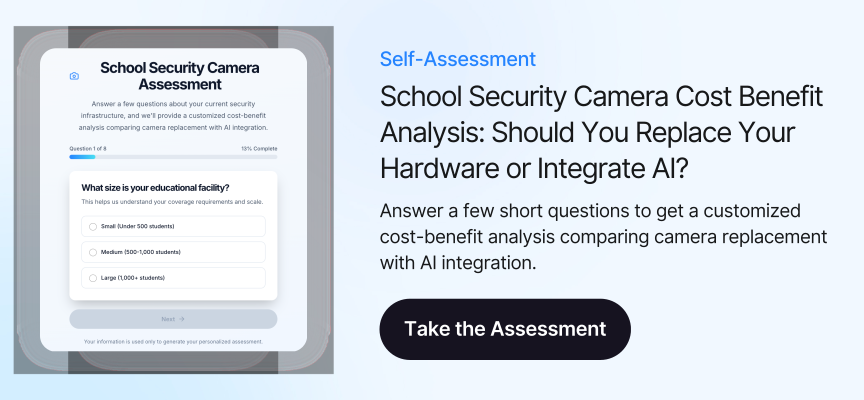
Take our School Security Camera Assessment.
Why Hardware Upgrades Miss the Real Problem
School security cameras serve two fundamentally different purposes. The first is recording, capturing footage that can be reviewed after an incident occurs. The second is monitoring, actively watching for threats as they develop.
Most Dahua cameras handle recording extremely well. They capture high-resolution footage, support night vision, and store video reliably. These technical capabilities have not changed dramatically in recent years. A 4MP Dahua camera from 2018 captures footage just as clearly as a 4MP model purchased today.
The monitoring challenge is where schools struggle. Human operators monitoring multiple camera feeds miss 95% of activity after just 22 minutes on screen. No amount of hardware upgrades can solve this fundamental limitation.
Consider what actually happens during security incidents at schools. The cameras captured the footage. The problem was that nobody saw it in time to intervene. Newer cameras would have captured the same footage just as clearly, with the same outcome.
The AI Software Alternative: Transforming Dahua Cameras You Already Own
AI security software works as an intelligent layer on top of existing camera infrastructure. It analyzes video feeds continuously, detecting specific threats and alerting security teams within seconds. This approach transforms passive recording systems into active security tools.
VOLT AI exemplifies this software-first approach. The platform connects to existing IP cameras, including Dahua cameras, through standard RTSP streaming protocols. This is the same technology Dahua cameras have supported for over a decade.
The table below illustrates the fundamental difference between hardware replacement and software enhancement:
|
Security Challenge |
Hardware Upgrade Approach |
AI Software Approach |
|
Weapon detection |
Cameras record weapons if visible |
AI identifies weapons in 2-5 seconds and alerts staff |
|
Medical emergencies |
Footage reviewed after incident reported |
Real-time person-down detection triggers immediate response |
|
Fight prevention |
Recording captured after fight ends |
Crowd formation analysis enables intervention before escalation |
|
After-hours monitoring |
Same recording regardless of time |
Automatic alerts when unauthorized presence detected |
|
Staff workload |
Requires constant human monitoring |
AI monitors 100% of feeds 24/7 |
This comparison reveals why schools are increasingly choosing software over hardware. New cameras would record incidents with identical clarity. AI software actually prevents incidents by enabling faster response.
Related Content:
- School Security Camera Systems: Integration vs. Replacement
- Leveraging Existing School Security Camera Infrastructure: A Technical Guide
- School Security Camera ROI: Measuring What Actually Matters
- Real-Time Intelligence: How AI Transforms Security Cameras in Schools from Reactive to Proactive
- Security Camera Implementation: Hardware Deployment vs. Software Integration Timelines
- Future-Proofing School Security: Why Software Ages Better Than Hardware
Dahua Camera Compatibility: What You Need to Know
Dahua cameras manufactured within the last decade typically support the protocols required for AI integration. The technical requirements are straightforward and most existing installations already meet them.
Essential compatibility factors include:
- RTSP support: Real Time Streaming Protocol enables AI software to receive and analyze video feeds. Dahua cameras have supported RTSP as a standard feature for years.
- Video encoding: H.264 encoding is widely supported, with H.265 preferred for optimal bandwidth efficiency. Both formats work with modern AI platforms.
- Network connectivity: IP cameras connected to your network infrastructure can stream to AI software through standard protocols.
- Resolution: Cameras with 1080p resolution or higher provide sufficient detail for accurate threat detection.
The practical implication is significant. Schools do not need to replace functioning Dahua cameras to gain AI capabilities. The existing hardware already supports the integration.
David Wrzesinski, security leader at Robinson ISD in Texas, explains: "We have kind of a hodgepodge of cameras, every campus put in at different times with different cameras... and it worked seamlessly."

Real-World Implementation: Speed and Simplicity
Hardware replacement projects require extensive planning, procurement, installation, and configuration. AI software implementations follow a dramatically compressed timeline.
VOLT AI deployments typically progress through these phases:
|
Implementation Phase |
Timeline |
Activities |
|
Assessment |
Days 1-3 |
Camera inventory, network evaluation, coverage mapping |
|
Configuration |
Days 4-7 |
Camera connections, rule setup, alert configuration |
|
Testing |
Days 8-12 |
Detection verification, workflow refinement |
|
Go-Live |
Day 14 |
Full operational capability |
Compare this two-week implementation to hardware projects that routinely require six months or longer. The speed difference matters beyond convenience. Every week spent on implementation is a week without enhanced protection.
Principal Adam Neely of Prescott High School in Arizona experienced this rapid deployment firsthand: "It felt instantaneous. It was like the blink of an eye and we were up and running."
The Cost Comparison: AI Software vs. Dahua Camera Replacement
School security budgets face constant pressure. Understanding the true cost comparison between software enhancement and hardware replacement helps administrators make informed decisions.
Hardware replacement costs include:
- Equipment: Individual Dahua cameras range from $70 for basic models to $500 or more for advanced units, with installation adding $200 to $500 per camera
- Network infrastructure: Upgrades to switches, cabling, and storage systems
- Integration: VMS licensing and configuration
- Disruption: Staff time and operational adjustments during installation
VOLT AI pricing starts at $365 per camera stream annually for K-12 schools. This transparent pricing includes the AI software, human verification through VOLT's Security Operations Center, and ongoing support.
The financial comparison becomes more compelling when considering what each approach actually delivers. Hardware replacement provides newer recording capability. Software enhancement provides active threat detection, real-time alerts, and 24/7 intelligent monitoring.
Lynda Sailor, Chief Financial & Operating Officer at Aspen Academy, summarizes the value proposition: "Hiring the equivalent of one full-time security employee to attempt to do even a fraction of what VOLT can, costs more than the VOLT AI system. So when you think of it that way, it is a massive cost savings."

Visit our School Security Camera Resource Center.
Detection Capabilities That Dahua Camera Hardware Cannot Provide
The most compelling argument for software over hardware involves capabilities that no camera, regardless of cost, can deliver on its own.
AI-powered detection features include:
- Weapon detection and tracking: The system identifies firearms and other weapons within seconds, then tracks individuals across multiple cameras even after weapons are concealed.
- Medical emergency response: Person-down detection alerts staff immediately when someone collapses, enabling response times measured in seconds rather than minutes.
- Fight and bullying prevention: The system recognizes altercations as they begin, allowing intervention before situations escalate.
- Crowd formation analysis: Unusual gathering patterns trigger alerts, helping staff identify developing situations in areas like locker rooms where cameras cannot be placed.
- Unauthorized access monitoring: Custom rules alert staff when individuals enter restricted areas or remain on campus outside authorized hours.
- Camera health monitoring: Automatic alerts when cameras malfunction ensures your security infrastructure remains operational.
These capabilities transform how schools approach safety. Instead of reviewing footage after incidents occur, security teams can intervene as situations develop.
Addressing Common Concerns About AI Software Integration
School administrators considering AI software integration typically raise several practical concerns. Understanding how modern platforms address these issues helps inform decision-making.
"Our Dahua cameras are too old."
Most IP cameras manufactured in the last decade support the RTSP streaming required for AI integration. Age alone does not determine compatibility. The University of Illinois Chicago successfully deployed AI software across 142 cameras of various ages and manufacturers.
"We have cameras from multiple brands."
AI platforms designed for enterprise deployment work across different camera manufacturers. Your mixed Dahua, Hikvision, and Axis environment presents no barriers to integration.
"Our IT team is already stretched thin."
Modern AI software requires minimal IT involvement. Cloud-based deployments eliminate server management entirely. As Prescott High School discovered, "I don't know that we've integrated something that our IT was more happy with the process of than Volt."
"We're concerned about privacy."
Leading AI platforms use behavior-based analysis rather than facial recognition. VOLT AI analyzes movement patterns and clothing descriptions without identifying individual people, addressing both regulatory requirements and community concerns.

Visit our School Security Camera Guide.
Making the Decision: Questions to Ask Your Team
Before committing to either path, security teams should evaluate their specific situation. The following questions help clarify which approach best serves your school's needs.
Consider these evaluation factors:
- Current camera functionality: Are your Dahua cameras capturing clear footage? If recording quality meets your needs, hardware replacement primarily addresses cosmetic concerns.
- Actual security gaps: What incidents do you wish you had caught earlier? New cameras would record the same incidents the same way. AI software enables earlier intervention.
- Budget realities: What can your district actually fund? Software implementations typically cost 60-70% less than hardware replacement while delivering superior capabilities.
- Implementation timeline: How quickly do you need enhanced protection? Software deploys in weeks. Hardware projects extend for months.
- Long-term scalability: How will your security needs evolve? Software platforms adapt through updates. Hardware requires replacement cycles.
The Path Forward: Getting Started with AI Enhancement
Schools ready to explore AI software integration can begin with a structured evaluation process. This approach validates compatibility, demonstrates capabilities, and builds organizational confidence before full deployment.
Recommended next steps include:
- Camera audit: Document your existing Dahua camera inventory, including models, locations, and current utilization
- Network assessment: Evaluate bandwidth capacity and network configuration to ensure adequate support for AI integration
- Stakeholder alignment: Identify what matters most to security, administration, and IT teams to ensure the selected solution addresses all priorities
- Demonstration: Request a live demo showing how AI detection works with cameras similar to yours
- Pilot planning: Consider starting with a focused deployment on priority cameras before expanding campus-wide
David Wrzesinski from Robinson ISD advises: "Don't judge it. Test the system... run it through, see how far the concepts there." This hands-on evaluation approach helps schools understand exactly what AI software delivers before committing to full implementation.
Get answers from real schools about AI security camera software integration.
Transform Your Dahua Camera Investment Today
Your Dahua cameras represent years of investment and careful planning. Replacing them discards that value. AI software preserves and extends it.
The choice between hardware replacement and software enhancement ultimately comes down to what problem you're trying to solve. If your cameras produce blurry footage, new hardware makes sense. If your challenge is actually seeing and responding to threats in real time, software delivers what hardware cannot.
VOLT AI works with your existing Dahua cameras to provide real-time threat detection, immediate alerts, and comprehensive monitoring without the cost and disruption of wholesale replacement. The platform transforms passive recording systems into active security tools that protect students and staff around the clock.
Ready to see how AI software can enhance your existing cameras? Schedule a demonstration to see VOLT AI in action with cameras like yours. Your infrastructure investment has more potential than you realize.