Insights
Weapon Detection AI: Where It Fits in Everyday School Safety

A safety plan starts with ordinary days: a student who faints between classes, a shoving match near the cafeteria, a visitor in a part of the building where they shouldn't be. This post looks at how camera software fits those everyday moments and weapons visible to the camera.
School administrators today face an unprecedented security challenge: protecting students and staff while maintaining an environment conducive to learning. Traditional security measures can fall short, leaving dangerous gaps in protection that can have devastating consequences.
Read the full guide on gun and weapon detection.
The Critical Need for Proactive Weapon Detection in Schools
Current Security Gaps Leave Schools Vulnerable
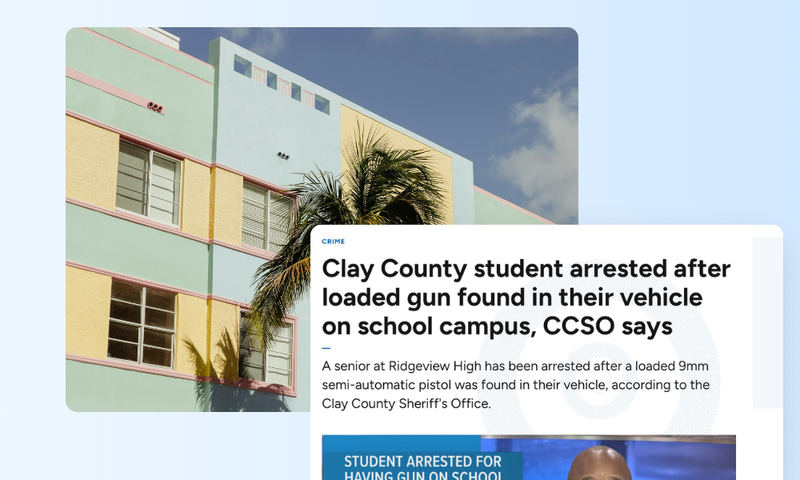
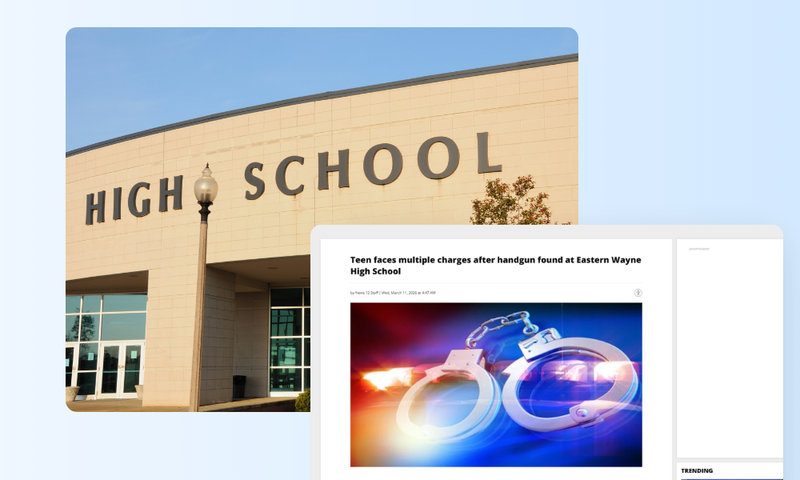
Current school security approaches rely heavily on reactive measures that activate after incidents begin. Metal detectors create bottlenecks and require constant staffing, while traditional security cameras capture footage that is typically reviewed only after an incident occurs. This reactive stance leaves gaps, time that could mean the difference between early detection and tragedy.
Alarming Statistics Underscore the Urgency
Schools must balance comprehensive security with creating welcoming learning environments. Students, parents, and staff deserve assurance that their safety is protected without feeling like they're in a prison-like atmosphere.
Effective school security strategies shift from reactive response to proactive early detection.
Core Technology Components
The technology relies on several key components that work together:
Advanced Computer Vision Processing:
- Visual transformer models that understand how objects relate in a scene
- Convolutional neural networks for object recognition
Processing Capabilities:
- Simultaneous monitoring of multiple camera feeds
- Integration with existing camera infrastructure
Seeing the whole situation
This gives security teams situational context during an incident. The alert names what was seen and where; the email and the VOLT app show the camera view.
Visit our complete resource center for AI Video Monitoring content.
Understanding these features helps administrators evaluate which systems best serve their specific security needs.
| Feature | Capability | Security Benefit |
|---|---|---|
| Multi-Camera Integration | Analyzes feeds from connected cameras | Works across connected cameras |
| Privacy Protection | Works without facial recognition | Maintains student privacy while supporting safety |
| How alerts are reviewed | A VOLT reviewer checks a moment by default before staff are notified. | Staff are notified |
- Multiple Angles: Recognizes threats from various camera perspectives
- Works with existing IP camera networks
- Integration with emergency alert systems
- Through open-API integrations, an alert can feed your existing emergency procedures.
These features combine to create security systems that transform reactive camera monitoring into proactive threat detection.
Testing Methodologies
These validation exercises provide critical insights into system performance and reliability under actual operational conditions.
Performance in Educational Settings
At facilities like Aspen Academy, the school tested multiple AI security solutions. During evaluation processes, the school tested multiple solutions including VOLT, Net Talon, ZeroEyes, and Avigilon. According to Lynda Sailor, Founder and Chief Financial & Operating Officer of Aspen Academy, VOLT's system demonstrated remarkable speed: "I got a weapons notification on my phone before the individual with the weapon even got to the entrance of the school."
“I got a weapons notification on my phone before the individual with the weapon even got to the entrance of the school.”
Lynda Sailor
CFO, Aspen Academy
Performance Validation Examples
Real-world testing has confirmed system effectiveness across diverse scenarios:
- Replica weapon recognition: Training guns and prop weapons triggered appropriate alerts Multiple environment validation: Testing across indoor, outdoor, and varying lighting conditions
While specific performance metrics vary by system and environment, leading solutions demonstrate:
- Effective performance across various lighting conditions
- Reliable operation with different camera types and angles
Understanding Different Technology Approaches
The market offers various approaches, each with distinct capabilities and limitations.
| Solution Type | Primary Focus | Key Limitations |
|---|---|---|
| Single-Purpose Detection | Gun detection only | Limited threat coverage |
| Multi-Detection AI Systems | Multiple threat types | Higher complexity |
| Entry Scanning Solutions | Perimeter-based detection | Coverage gaps |
Feature Comparison Analysis
Different providers offer varying capabilities that impact overall security effectiveness:
VOLT Advantages:
- Detection beyond weapons Integration with existing camera infrastructure
Competitor Limitations:
- Single-focus detection capabilities
- Limited scene awareness
- Reduced integration flexibility
Deployment and Cost Considerations
- Integration Flexibility: Working with existing camera investments
Implementation Best Practices for Schools
Pre-Deployment Planning for Success
Administrators must balance comprehensive security coverage with practical implementation constraints.
Effective implementation begins with thorough assessment of current security infrastructure and specific institutional needs. Schools should evaluate their existing camera networks, identify coverage gaps, and determine integration requirements.
Key planning considerations include:
- Camera Network Assessment: Evaluating existing IP cameras for AI compatibility Coverage Gap Analysis: Identifying areas requiring enhanced monitoring Alert Protocol Development: Establishing clear response procedures for weapon detection Staff Training Requirements: Helping personnel understand system operation Emergency Response Integration: Connecting with your existing emergency procedures
System Configuration and Customization
Zone-Based Rule Configuration: Advanced systems enable administrators to create custom security zones with specific detection parameters:
- Restricted Zones: Enhanced monitoring with additional threat categories After-Hours Monitoring: Modified sensitivity for facility protection Special Event Coverage: Temporary configuration adjustments
The Complete Guide for AI Video Monitoring
Training and Support Requirements
Successful deployment requires comprehensive training for all stakeholders involved in system operation and emergency response.
Essential training components include:
- Administrative Training: System configuration and alert management Security Staff Education: Response protocols and system capabilities Emergency Procedures: Integration with existing safety protocols Ongoing Support: Continuous system optimization and updates
Schools benefit from partnerships with providers who offer comprehensive training programs and ongoing technical support to maintain optimal system performance.
Privacy-Preserving Technology Design
Modern systems must balance comprehensive security with respect for individual privacy.
These systems flag possible incidents rather than identifying individuals.
Key privacy protection features include:
- No Facial Recognition: VOLT does not use facial recognition
- Encrypted Data Management: All video data receives robust encryption protection
- Limited Data Retention: Incident footage stored only as long as necessary
- Access Control: Restricted system access limited to authorized personnel
Community Acceptance and Transparency
Successful implementation requires clear communication with students, parents, and community members about system capabilities and privacy protections. Schools should emphasize that these systems enhance safety while respecting individual privacy rights.
An effective approach involves transparent discussion of system capabilities, privacy safeguards, and the important role these technologies play in creating safer learning environments.
The Future of School Security Technology
Advanced AI as the New Standard
These systems transform existing security infrastructure into intelligent protection networks that can help staff notice threats and act.
Schools implementing AI security solutions position themselves at the forefront of educational safety innovation.
Investment in Protection
These systems can also help detect and respond to falls in schools, supporting student health and safety beyond security threats.
These systems represent a fundamental shift from reactive security measures to proactive threat detection.
The investment in advanced AI security technology ultimately supports the fundamental mission of education: providing safe environments where students can learn and thrive.
Consider also how these systems address broader challenges like addressing bullying and fighting to create safer environments.
It depends on the provider you choose. VOLT works with existing IP cameras; some older analog cameras may need an upgrade.
Where VOLT fits
VOLT is built to notice moments: a fall, a possible fight, someone where they shouldn't be.
VOLT keeps visually tracking a person by appearance after they've been identified with a visible weapon, even once the weapon is hidden.
VOLT detects possible handguns, long guns, and knives visible to the camera.
It doesn't see through clothing or into bags.
VOLT works with existing IP cameras. Some older analog cameras may need an upgrade.
VOLT works with existing IP cameras.
VOLT is built to notice moments, and your staff decide what happens next.
Related reading