Insights
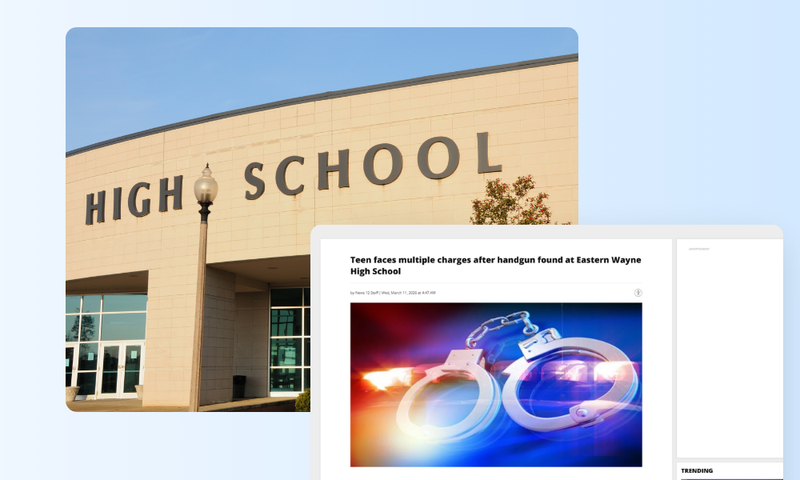
Clay County Student Arrested with Loaded Gun on School Campus


- Clay County Sheriff's Office arrested a student after discovering a loaded firearm in their vehicle on school property
- The incident highlights ongoing challenges with perimeter security and vehicle screening protocols
- Detection occurred through investigation rather than proactive security screening systems
- Case underscores the need for comprehensive threat detection beyond building entrances
Clay County School Campus Incident Details
The Clay County Sheriff's Office arrested a student on March 5th after discovering a loaded gun in the student's vehicle while parked on school campus property. According to First Coast News's reporting, the weapon was found during an investigation rather than during a routine security screening.
Clay County operates multiple K-12 schools across northeastern Florida, serving approximately 38,000 students. The district covers both suburban and rural areas, with varying security infrastructure across different campus locations.
The discovery raises questions about campus perimeter monitoring and vehicle screening capabilities. Most school security protocols focus heavily on building entrances, while parking areas often receive less systematic oversight.
Why Vehicle-Based Threats Matter for Campus Security
Vehicle-based weapon incidents represent a significant blind spot in traditional school security approaches. Unlike weapons brought through main entrances, items stored in vehicles bypass most conventional screening measures.
Security professionals note that parking lot incidents create unique response challenges. The distance from administrative offices can delay intervention, while outdoor environments complicate threat assessment protocols.
Current detection methods for parking area threats typically rely on behavioral observations rather than technological screening. This approach depends heavily on staff training and reporting protocols that may not scale consistently across large campus environments.
The Clay County case demonstrates how weapons can remain undetected on campus property for extended periods when stored in vehicles. This scenario creates ongoing exposure to risk that traditional building-focused security measures don't address.
Lessons from Clay County's Campus Security Challenge
Security leaders should evaluate their current vehicle screening and parking area monitoring protocols following this incident. Key considerations include establishing clear policies for campus parking areas and determining appropriate oversight levels.
Staff training programs need to address vehicle-related security concerns alongside building-based protocols. Personnel should understand reporting procedures for suspicious activity in parking areas and how to coordinate with law enforcement when threats are identified.
Technology deployment strategies should prioritize comprehensive campus coverage over entrance-only approaches. Modern security systems can extend monitoring capabilities to parking areas and other perimeter locations.
Regular security assessments should specifically evaluate vulnerabilities at vehicle access points and in parking areas. These reviews help identify gaps in current coverage and inform resource allocation decisions.
Concerned about weapon detection capabilities? Learn how AI-powered systems identify threats in real-time at our Gun and Weapon Detection Resource Center.
Editorial Disclosure: This article was produced with AI assistance and reviewed by VOLT editorial team. News sources are linked for verification. VOLT provides AI-powered security solutions for educational institutions, healthcare facilities, and residential communities. For more information, visit volt.ai.