Insights


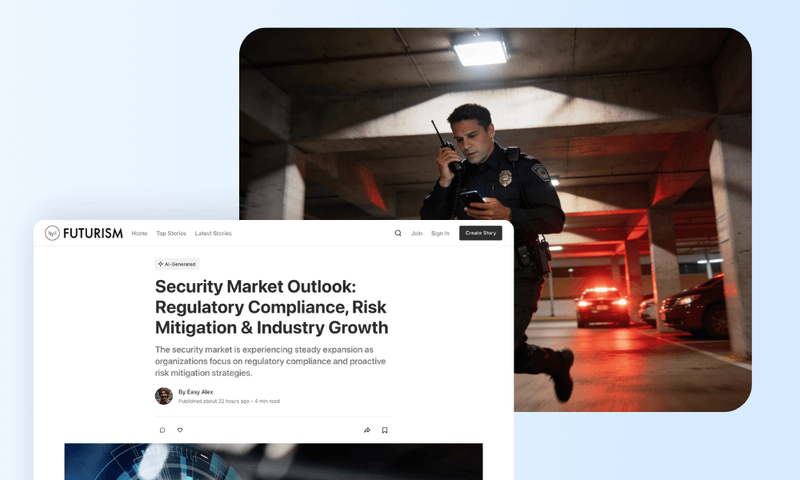
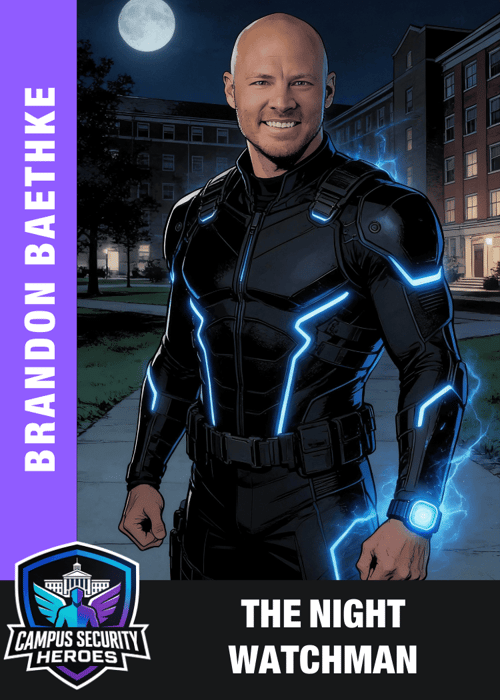
Some people find their calling by accident. Brandon Baethke found his at 3 AM, intercepting someone who didn't belong in a student dormitory.
"Who knows how that could have ended?" Baethke reflects. "I do. That's why I stopped it."
As Manager of Safety, Risk & Compliance at Maryville University, Baethke leads an 11-person armed security team responsible for protecting a campus that never truly sleeps. His path here wasn't planned. But the work he does now feels inevitable.
An Unexpected Calling
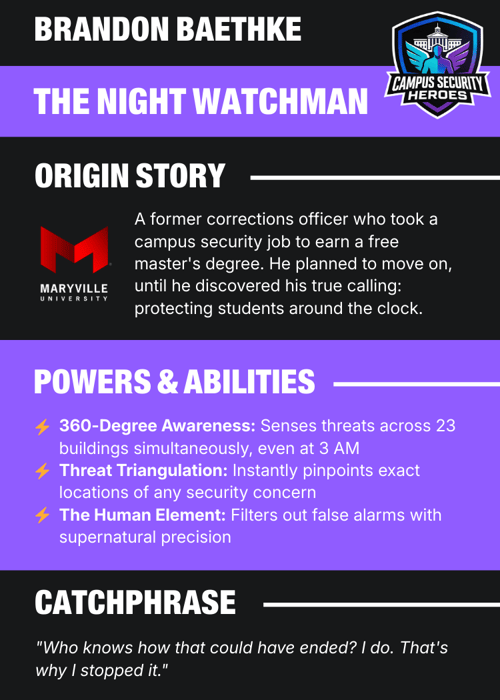
Baethke's origin story reads like a career detour that became a destination. He spent years as a corrections officer before taking a campus security position at Maryville University. The draw wasn't the job itself. It was the free master's degree that came with it.
He planned to earn his credential and move on to something else. The students changed his mind.
Working campus security exposed Baethke to a different kind of protection than what he'd known in corrections. Here, he wasn't just managing risk. He was safeguarding futures. The late nights, the constant vigilance, the weight of responsibility for thousands of young people finding their way in the world. It fit him in ways he hadn't anticipated.
The temporary job became a permanent mission.
The Scale of the Challenge
Maryville University presents a complex security landscape. The campus serves over 1,000 residential students, 3,500 commuters, and approximately 5,000 online learners. Twenty-three occupied buildings spread across the St. Louis suburbs, with perimeter fencing and two primary road entrances handling roughly 3,500 vehicles daily.
Baethke's team of 11 officers carries responsibility for all of it.
The math doesn't favor human-only monitoring. With that many buildings, that many entry points, and that many students moving through campus at all hours, gaps are inevitable. Before implementing AI-powered security, most camera footage went unwatched in real time. The team responded to incidents after they occurred rather than preventing them.
"With our small staff, we can't possibly be everywhere at the same time," Baethke explains. "We weren't monitoring everything before."
Building a System That Never Blinks
When Maryville began evaluating AI security solutions, Baethke established three non-negotiable requirements. The system needed comprehensive weapon detection covering long guns, pistols, and knives. It required real-time tracking that maintained visibility after initial detection. And it had to include human validation to eliminate the alert fatigue that plagues so many security operations.
Other vendors would have required a complete infrastructure overhaul with price tags approaching $1.4 million. VOLT AI met every requirement while integrating with Maryville's existing Genetec camera fleet.
"A lot of companies that offer this kind of solution are stuck in their ways," notes Raphaella Prange, Vice President for Student Life. "We saw VOLT's appetite to do things differently depending on the campus."
The implementation gave Baethke something he'd never had before: 360-degree awareness across all 23 buildings, even at 3 AM when staffing runs thin and threats don't take breaks.
When Vigilance Pays Off
The system proved its worth quickly. In one recent incident, VOLT's people loitering detection identified an unauthorized individual attempting to access a dormitory in the middle of the night. The immediate alert enabled Baethke's team to intercept and remove the person from campus before the situation could escalate.
"We got an alert at 3 AM about someone trying to get into a dorm room where they didn't belong," Baethke recounts. "We intervened and sent him off campus. Who knows how that could have ended without VOLT."
This is what Baethke means when he talks about knowing how things could have ended. Years of experience in corrections and campus security have shown him the trajectories that unfold when threats go undetected. The unauthorized visitor at 3 AM. The weapon that enters a building unchecked. The medical emergency that happens in an empty hallway.
He's seen enough to know that the best outcomes happen when someone intervenes early. Now he has the tools to do exactly that.
The Human Element
Technology amplifies what Baethke's team can do, but it doesn't replace the judgment they bring to every alert. Every notification from the system passes through human validation before triggering a response. This prevents the alert fatigue that makes security personnel tune out warnings over time.
Baethke calls this "The Human Element," and he considers it essential. AI can detect. AI can track. AI can alert. But humans understand context. They know when a late-night visitor is a genuine threat versus a confused student. They recognize the difference between suspicious behavior and innocent confusion.
The combination of AI-powered detection and human judgment creates something neither could achieve alone: comprehensive protection that stays sharp through every shift, every night, every semester.
The Night Watchman
Campus security professionals rarely get recognition for what they prevent. The incidents that don't happen, the threats that get intercepted, the students who make it home safely because someone was watching. These victories are invisible by design.
Brandon Baethke has made peace with that invisibility. He didn't take this job for the recognition. He stayed because the work matters in ways that transcend a paycheck or a degree.
Every night, while students sleep and study and live their lives, The Night Watchman keeps watch. He knows how things could end if no one was paying attention.
That's why he stopped it.