Insights
AI Video Monitoring: What It Is and How AI Security Systems Work
"AI security system," "AI camera software" and "AI video monitoring" describe the same idea: software that watches video from cameras and flags specific moments for people to look at. This page explains what that software does, where it helps, where it does not, and what to ask before you buy.
What AI video monitoring is
Traditional camera systems record. Someone has to watch live, or go back through video after something happens. AI video monitoring adds software that analyzes the video as it comes in and raises a flag when it sees something it has been built to notice, such as a person in a closed area, a possible fight starting, or a visible weapon.
AI security systems vs. AI camera software
- AI camera software runs on video from existing IP cameras. It is sold as software.
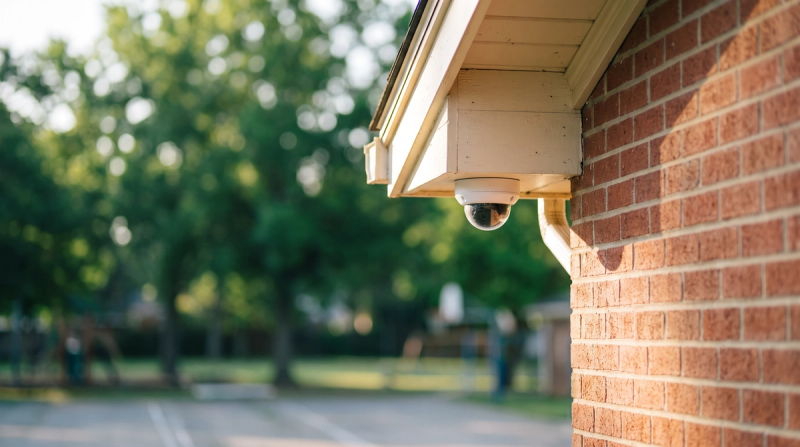
- AI security cameras put the analysis inside the camera itself, which means replacing hardware.
- AI security system is the umbrella term. It can include either of the above, plus alerts, access control and reporting.
For schools, the practical question is whether the AI can work on your existing IP cameras, because replacing hardware across a district is a large, slow capital project. More on that tradeoff: security cameras for schools.
How it works
- Video in. Existing IP cameras can connect over RTSP. A camera compatibility review confirms the specific setup.
- Analysis. Models look for specific events and objects, frame by frame and over time.
- A flag. When something matches, the system creates an event with a clip and the camera location.
- Review. A VOLT reviewer checks a moment by default before staff are notified.
- Notification. Each school's notification plan sets who hears about what. The alert names what was seen and where; the email and the VOLT app show the camera view.
What it can notice, and what it can't
AI video monitoring works on what the camera can see. It can flag a person somewhere they should not be, a possible fight, or a weapon in plain view. It cannot cover areas without cameras. Treat any claim that sounds broader than that with care.
Common uses
- Access and doors: people in restricted areas, entry after hours.
- Perimeter: fence lines, parking lots and fields when the campus is closed.
- Behavior: possible fights, someone in a closed building after hours.
- Investigations: finding the right clip instead of scrubbing hours of video.
Benefits over recording alone
- Attention where it is needed. Staff look at flagged moments instead of walls of monitors.
- Earlier awareness. Your team can learn about a situation while it is happening, not after.
- Better use of your existing IP cameras. Software can add value to cameras a school has paid for.
- Records for planning. Event history shows where and when problems cluster.
Challenges to plan for
Privacy
Write down who can see video and flags, how long they are kept, and how families can ask questions. Ask each vendor whether it uses facial recognition.
Bias and false alarms
Ask how the vendor tests its models across lighting, camera angles and people, and how false flags are handled before they reach staff.
Cybersecurity
The software touches your network and your video. Ask about encryption, access logging and how updates are delivered.
How to choose an AI security system
- Environment: indoor, outdoor, low light, wide fields of view.
- Fit: works with your existing IP cameras and the safety tools your team already uses.
- How alerts are reviewed: who checks a flag before your team is notified.
- Data handling: where video is processed and stored, retention, access controls.
- Scale: adding buildings and cameras without re-engineering.
- Support: onboarding, tuning, and who you call after hours.
- Cost model: what is priced and what is included. VOLT is priced per camera stream per month.
Where VOLT fits
VOLT is built to notice moments: a fall, a possible fight, someone where they shouldn't be. VOLT helps get the right people to the right place at the right time.
VOLT detects possible handguns, long guns, and knives visible to the camera.
Works with existing IP cameras.
FAQs
How is AI video monitoring different from traditional CCTV?
CCTV records. AI video monitoring analyzes the video as it comes in and flags specific moments, so people can respond while something is happening.
Is AI camera software the same as an AI security camera?
Not necessarily. AI camera software works on video from existing IP cameras. An AI camera puts the analysis inside new hardware.
Does it use facial recognition?
Some products do. Ask directly. VOLT does not use facial recognition.