Insights
How AI Camera Software Spots Visible Weapons in Schools
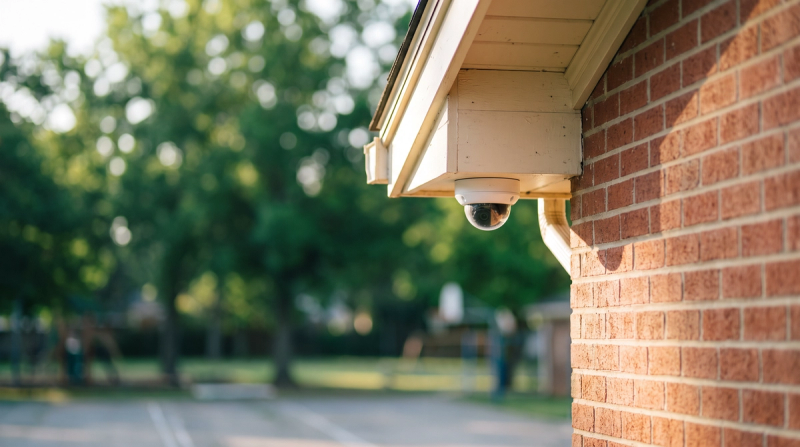
Ask a principal what keeps them up at night and the answer is rarely one dramatic scene. It's the student who faints in a stairwell during passing period, the shoving match behind the gym that turns into a real fight, or the adult in the back parking lot who doesn't belong there. Those are the moments a school's cameras capture all day, and they're the moments nobody is usually watching live.
That's the starting point for any honest conversation about weapons and cameras. A school safety plan is built around everyday care first, and a weapon is one rare, serious moment inside that plan.
Start with the everyday moments
VOLT is built to notice moments: a fall, a fight, someone where they shouldn't be.
In practice, that means a hall monitor learns about a student on the floor near the science wing while it's happening, not when someone finds them later. A dean hears about a scuffle at the bus loop before it draws a crowd. A facilities lead knows someone is on campus after hours. None of these are weapon stories, and they happen far more often than weapon stories do.
Knowing where the situation is now
Whatever the moment is, the next question is where it's going. A person rarely stays where they were first seen.
VOLT tracks a person by visual appearance across the camera footprint and shows that track on a 3D floor plan, so first responders reach where the situation is unfolding now, not where it started.
For a school team, that's the difference between "someone saw something by the east entrance a minute ago" and "here is where that person is right now." It helps the SRO and administrators decide who moves, which rooms lock and which hallways stay clear.
What "spotting a weapon" really means for a camera
Camera software can only act on what a camera can see. It doesn't attempt to see through clothing or detect hidden weapons. A gun in a backpack or a knife in a pocket isn't something any camera image shows, so it isn't something camera software can find.
What it can do is notice when a weapon comes into view: a handgun shown in a hallway, a long gun carried across a parking lot, or a knife pulled out in a cafeteria. That's the window where a few seconds of awareness matters, because the people who need to act can know about it right away.
VOLT detects handguns, long guns, and knives that are visible to the camera.
Where entry screening fits
Entry screening, such as metal detectors and bag checks, works at the doors where it's staffed. It's built to find metal on a person or items in a bag at that point, which camera software can't do. Camera software works anywhere existing cameras already look, including hallways, stairwells, lots and fields, but only on what's visible.
Because they do different jobs, the decision isn't one or the other. Many districts weigh both against their buildings, staffing and budget. Our look at metal detectors in schools goes into the trade-offs at the door.
Using the cameras you already have
Most schools already have cameras in the places that matter. The gap is that nobody can watch all of them at once. Software that works with existing cameras turns those feeds into something a small team can act on, without a full hardware replacement.
VOLT is designed to work with most IP cameras you already have. Some older analog cameras may need an upgrade.
A person checks before your team hears about it
Schools don't want a phone buzzing every time a student holds up a stapler or a black umbrella. That's why a human step matters, especially for something as serious as a possible weapon.
By default, a VOLT reviewer checks it before your team is notified.
Your team then gets a clear picture of the moment and where it is, and follows its own plan: the front office, the administrators on duty and the school resource officer, using the steps the school has already practiced.
Questions to ask any vendor
- Does the software claim to find weapons a camera can't see? If so, ask exactly how.
- Which everyday moments does it notice, beyond weapons?
- Does a person review a moment before your staff is notified, and can you choose who gets notified?
- Will it work with the cameras you have now, and which ones would need an upgrade?
- How does it protect student privacy? (VOLT uses no facial recognition.)
The bottom line
A good school safety plan starts with everyday care and treats weapons as one serious moment within it. Camera software helps by noticing what cameras can actually see, showing where things are unfolding, and keeping a person in the loop. It doesn't replace screening at the door, and it doesn't see what's hidden.
See how it works on our weapon detection page, or how VOLT works from noticing a moment to help arriving.