Video Monitoring
Video Monitoring
What's in the Guide?

This guide was built to guide reveal how AI-powered video monitoring is transforming security from passive observation to protection. Discover how organizations are improving safety and protecting privacy—without replacing existing infrastructure.
Inside, you’ll learn how AI delivers:
- AI threat detection
- Weapon detection: visible handguns, long guns, and knives
- Everyday value: crowds forming, theft, vandalism, and people detected at times you set
- Alerts name what was seen and where
- Use cases across key industries
Whether you're in education, healthcare, property management, or retail—this guide shows how intelligent monitoring creates safer, smarter environments.
Don't have time to read this?
Take a copy with you
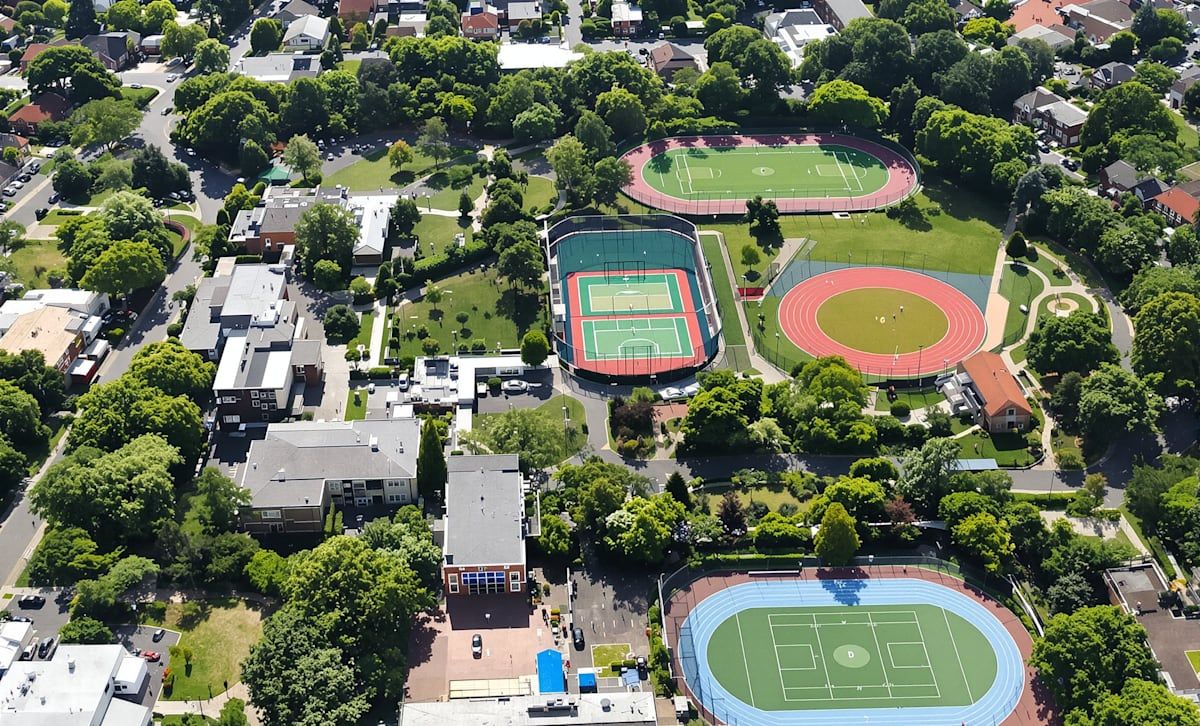
AI-powered video monitoring adapts to diverse security needs across multiple sectors, solving unique challenges in each environment.
Educational Institutions
Schools implement advanced video monitoring to create safer learning environments. Prescott High School uses AI video intelligence to detect and respond to situations ranging from visible handguns, long guns and knives to crowds forming, theft and vandalism. When a crowd forms or property is taken or damaged, the system alerts appropriate personnel, so staff know where to look.
Educational facilities particularly benefit from:
- Crowd-forming detection in hallways, cafeterias and at dismissal
- Weapon detection for early threat identification
- People detected in a space at times you set, such as a closed wing after hours
- Theft and vandalism detection on school grounds and in shared spaces
These capabilities create safer campuses while optimizing security resources, allowing educational staff to focus on teaching rather than constant vigilance.

Read the full case study here.
Healthcare Facilities
Hospitals and medical centers face unique security challenges, including patient safety, asset protection, and controlled access requirements. Video intelligence systems in healthcare settings prioritize:
- Theft and vandalism detection in lobbies, waiting areas and parking lots
- People detected in sensitive areas like medication storage at times you set
- Visitor management during and after visiting hours
- The camera view and area of each flagged moment, so staff know where to look
VOLT can flag people detected in areas like medication storage or a closed wing at times you set, and it can notice theft and vandalism in lobbies and parking areas.
Multi-Family Residential Properties
Residential communities use AI video monitoring to enhance resident safety while respecting privacy. Property managers particularly value:
- Unauthorized access detection for apartment buildings
- Parking lot and garage monitoring
- Common area security with privacy protection
These systems create the security residents expect while minimizing false alarms that plague traditional systems. The technology's ability to distinguish between normal resident behavior and genuine security concerns reduces unnecessary interventions.
Read the full RailField case study.
Commercial Security Applications
Retail environments, office buildings, and commercial properties deploy AI video monitoring to protect assets and personnel while optimizing security spending. These implementations typically focus on:
- After-hours access monitoring
- Customer/employee safety in parking areas
When integrated with existing security measures, these systems create comprehensive protection without requiring complete infrastructure replacement, making them cost-effective even for budget-conscious operations.

Read Ripple's full case study.

Effective security requires more than just detection—it demands streamlined incident management from alert to resolution. Advanced monitoring platforms now provide end-to-end incident management capabilities that transform how organizations handle security events.
The incident management process begins with detection and human validation to ensure accuracy. Your team stays focused on the moments that need them.
Once validated, the system notifies appropriate personnel based on customizable escalation protocols. Notifications include:
- The camera view and area of the flagged moment
- Live video feed of the incident
- Incident classification and severity assessment
- One-touch response options
When VOLT detects a possible visible weapon, your team is notified with the camera view and area, so your people can call for help following your own plan. VOLT doesn't share data or AI insights with law enforcement unless the customer requests it, and the customer owns the data.
Post-incident, these platforms automatically compile comprehensive incident reports with video evidence, timestamps, location data, and incident timelines. This documentation proves invaluable for investigation, improvement of security protocols, and when legal proceedings become necessary.
Teams using VOLT get the camera view and area of the flagged moment, so they know where to look.
The University of Illinois Chicago has seen dramatic improvements in incident management efficiency since implementing comprehensive video intelligence. Security staff now resolve incidents while maintaining better records for continuous improvement of their security protocols The team has been able to manage campus safety, medical emergencies, and parking lot monitoring more effectively across their entire 250-acre campus.
Further reading
- 10 Ways Real-Time Video Monitoring Transforms Security Operations
- Cloud-Based Security Cameras: The Future of Smart Video Surveillance
- Live Video Monitoring: Taking Security from Reactive to Proactive
- Top US-Based Security Camera Companies for Enterprise Solutions
- Video Surveillance Monitors: The Critical Command Center of Modern Security Systems
- Where to Place Security Cameras and Other Practical Tips
Let’s walk through some answers to questions about video monitoring.
1. What is AI-powered video monitoring?
AI-powered video monitoring uses artificial intelligence to analyze video feeds from security cameras, detecting specific objects, behaviors, or situations that may require attention. Unlike traditional passive recording, these systems actively interpret what they're seeing and alert security personnel to potential concerns.
2. How does AI video monitoring differ from traditional CCTV?
Traditional CCTV primarily records footage for later review, requiring human operators to constantly watch screens to identify issues. AI video monitoring actively analyzes all video feeds simultaneously, automatically detecting potential security concerns and alerting staff only when necessary.
3. Can AI video monitoring work with existing cameras?
Yes. VOLT works with your existing IP cameras. This allows organizations to enhance their security capabilities without replacing their current hardware investment, making implementation more cost-effective.
4. What types of events can AI video monitoring detect?
It can also flag crowds forming, theft, vandalism, and people detected in a space at times you set, such as a restricted area after hours.
5. How accurate are AI detection systems?
AI detections are possible events, not conclusions. Your staff decide what happens next.
6. Who is notified of incidents?
Your school chooses who is told and what to do next.
7. Can VOLT keep tracking a person?
VOLT keeps visually tracking a person by appearance after they've been identified with a visible weapon, even once the weapon is hidden.

8. How does AI video monitoring address privacy concerns?
Modern systems focus on behavior analysis rather than facial recognition. They track individuals based on clothing characteristics and movement patterns without identifying specific people. Data encryption and privacy-by-design approaches further protect sensitive information.
9. What are the deployment options for AI video monitoring?
Organizations typically choose between cloud-based deployment or on-premises deployment, which can be a better fit for larger installations or sites with limited bandwidth. The right option depends on facility size, bandwidth availability, and security requirements.
10. How long does implementation typically take?
Timelines depend on your site and deployment type. The plan covers setup, area configuration, alert rules, and team onboarding.
11. What IT requirements exist for AI video monitoring?
Requirements vary by deployment model. Cloud-based solutions need sufficient bandwidth to transmit video feeds, while on-premises deployments require server space and network infrastructure. Systems can operate within existing IT environments.
12. How does AI video monitoring benefit school security?
Schools use VOLT to notice visible handguns, long guns and knives, crowds forming in hallways or at dismissal, theft, vandalism, and people in a building at times you set. VOLT works with your existing IP cameras.

13. What role do humans play in AI video monitoring systems?
Humans remain essential for verifying alerts, responding to incidents, and making critical decisions. The AI handles the tedious task of continuous monitoring, freeing security personnel to focus on response and intervention when potential threats are identified.
14. Can AI video monitoring reduce security costs?
These systems can help teams put staff time where it is needed. Security teams can monitor more cameras with fewer personnel while improving overall effectiveness. The technology allows organizations to focus human resources on response rather than continuous monitoring.
15. How do AI systems handle incident management?
Comprehensive systems manage the entire incident lifecycle from detection through resolution. They provide alerts with location information, facilitate communication between responders, and compile incident reports with video evidence.
16. What happens when internet connectivity is lost?
On-premises systems continue to function during internet outages, maintaining local detection and alerting capabilities. Cloud-based systems typically include redundancy features to minimize disruption, but may have limited functionality during connectivity issues depending on the specific implementation.
17. Can AI video monitoring integrate with other security systems?
VOLT works with your existing IP cameras. For other security systems, tell us what you run and we'll talk through the fit.
18. How scalable are these systems?
AI video monitoring systems scale from small installations with a handful of cameras to enterprise deployments with thousands of cameras across multiple locations. The architecture allows organizations to start small and expand as needs evolve.
19. What maintenance requirements exist for AI video monitoring?
Maintenance primarily involves software updates, occasional camera maintenance, and periodic review of detection rules as security needs evolve. Cloud-based systems can handle updates automatically, while on-premises solutions may require more hands-on maintenance.
20. How do weather and lighting conditions affect system performance?
Environmental factors can impact detection accuracy, but advanced systems incorporate adaptive algorithms that adjust to changing conditions. Proper camera placement and configuration help minimize these effects. Some systems include low-light enhancement capabilities to maintain effectiveness in challenging lighting conditions.
21. Can video monitoring systems detect objects left behind?
VOLT focuses on visible handguns, long guns, and knives, crowds forming, theft, vandalism, and people detected at times you set.
22. How do monitoring systems handle camera failures?
Quality systems include camera health monitoring features that automatically detect when cameras go offline or experience technical issues. Administrators receive notifications about camera failures, so maintenance can be scheduled.
23. What reporting capabilities do AI video monitoring systems provide?
Comprehensive solutions offer detailed reporting including incident logs, incident timelines, detection statistics, and system health metrics. These reports help security teams analyze patterns, improve procedures, and demonstrate compliance with security requirements.
24. Can AI video monitoring work in low-light conditions?
Performance depends on camera quality and lighting. VOLT works with your existing IP cameras.
25. How do these systems handle high traffic areas?
AI algorithms are built to filter normal traffic from concerning behavior even in busy environments. The systems establish baseline patterns for each area and time period, allowing them to identify truly unusual activities despite high volumes of movement.
26. What happens to stored video footage?
Storage policies vary by system and organizational needs.
27. Can AI video monitoring detect emergency situations like fires?
VOLT does not list smoke or fire among its detections today. It flags visible weapons, crowds forming, theft, vandalism, and people at times you set.
28. How do organizations determine where to place cameras for optimal monitoring?
Professional security assessments typically analyze facility layouts, traffic patterns, and risk factors to determine optimal camera placement. Advanced AI systems can also help identify coverage gaps based on detection patterns and movement flows.
29. Do AI monitoring systems work outdoors?
Yes, these systems function in outdoor environments, though they face additional challenges from weather, lighting variations, and wildlife. Proper camera selection and system configuration help maintain detection accuracy in outdoor settings.
30. How does AI video monitoring handle unauthorized entry attempts?
VOLT can flag people detected in a restricted area at times you set, such as a building wing after hours.
31. Can these systems identify specific types of weapons?
It can detect possible handguns, long guns, and knives that are visible to the camera.
32. What training do security personnel need to operate these systems?
Training requirements vary by system complexity but typically include orientation on the user interface, alert management, appropriate responses to different detection types, and basic troubleshooting. Training and support vary by vendor.
33. How do these systems handle false positives?
Customizable settings help, and your school chooses who is told.
34. What considerations exist for multi-building or campus environments?
Campus deployments typically require unified management interfaces that coordinate detection across multiple buildings while maintaining location awareness. Proper networking ensures consistent coverage and communication across the entire property.
35. How do organizations measure the ROI of AI video monitoring?
ROI calculations typically factor in reduced security staffing needs, prevention of property loss, and potential liability reduction. Some organizations also consider less tangible benefits like improved sense of safety among occupants.
36. What standards or certifications apply to AI video monitoring systems?
Ask us about the standards your organization needs and we'll walk through how VOLT handles them.
See VOLT on your own cameras.
A short call, your sites, and a clear view of what VOLT would notice.
No commitment · Works with existing IP cameras