Insights
School Counselor Access Hits a Historic High

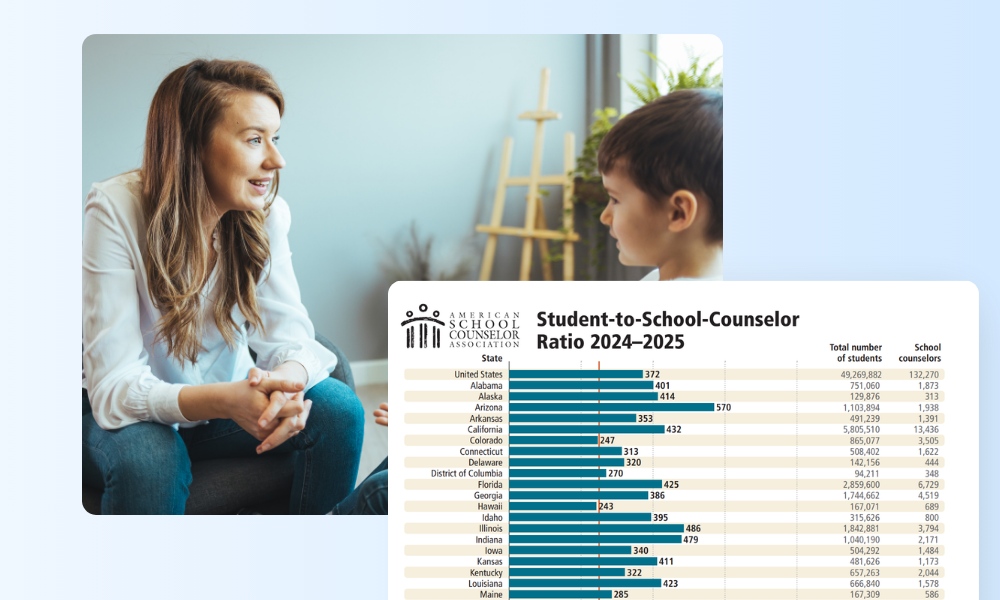
- High schools have achieved the American School Counselor Association's recommended 195-224 students per counselor ratio for the first time
- This milestone demonstrates how targeted funding can transform student support infrastructure
- The achievement highlights successful resource allocation strategies that security leaders can apply to technology initiatives
- Comprehensive student support systems create stronger overall school safety environments
National Counselor Access Achievement Details
American high schools have reached a historic milestone in student support services. The latest data shows high school counselor-to-student ratios now fall within the American School Counselor Association's recommended range of 195 to 224 students per counselor.
This represents the first time schools have met this critical benchmark. The achievement spans districts nationwide, from urban centers to rural communities.
The improvement in counseling access reflects sustained investment in student support infrastructure. Schools have leveraged federal funding, state grants, and local budget allocations to expand counseling staff. This comprehensive approach demonstrates how strategic resource planning can transform student services.
The timing coincides with increased recognition of mental health as a core safety component. Districts have prioritized counseling access alongside physical security measures, creating more holistic safety environments.
Why Comprehensive Funding Strategies Matter for School Safety
This counseling milestone offers important lessons for the implementation of security technology. Schools that successfully expanded counseling services used diversified funding approaches rather than relying on single budget lines.
The achievement required multi-year planning and stakeholder coordination. District leaders combined federal Title programs, state mental health grants, and community partnerships to sustain counselor positions. This model applies directly to security technology projects.
Mental health support and physical security systems work together to create comprehensive safety environments. Districts investing in both areas report stronger overall safety outcomes than those focusing on single solutions.
The counseling expansion also demonstrates how schools can build public support for safety investments. Parents and community members readily understand the value of student support services, creating momentum for broader safety initiatives.
Lessons from Successful Student Support Funding
Security leaders can apply several strategies from the counseling access achievement to their technology initiatives.
Start with needs assessment documentation that connects to established standards. The counseling expansion succeeded in part because schools could refer to clear American School Counselor Association guidelines. Security leaders should similarly align proposals with recognized industry standards.
Develop multi-year implementation plans that spread costs across budget cycles. Schools didn't hire new counselors all at once but instead created sustainable growth trajectories. Technology deployments benefit from similar phased approaches.
Combine multiple funding sources to reduce single-point budget pressure. Successful counseling programs mixed federal grants, state allocations, and local funds. Security projects should similarly diversify funding sources.
Build stakeholder coalitions that extend beyond security personnel. The counseling expansion involved teachers, parents, and community leaders. Technology initiatives need similar broad-based support.
Document measurable outcomes that demonstrate return on investment. Schools tracked counselor ratios and student access metrics. Security leaders should establish clear success metrics before implementation begins.
Ready to explore funding options for your institution's security upgrade? Learn at our School Security Funding Resource Center.
Editorial Disclosure: This article was produced with AI assistance and reviewed by VOLT AI editorial team. News sources are linked for verification. VOLT AI provides AI-powered security solutions for educational institutions, healthcare facilities, and residential communities. For more information, visit volt.ai.