

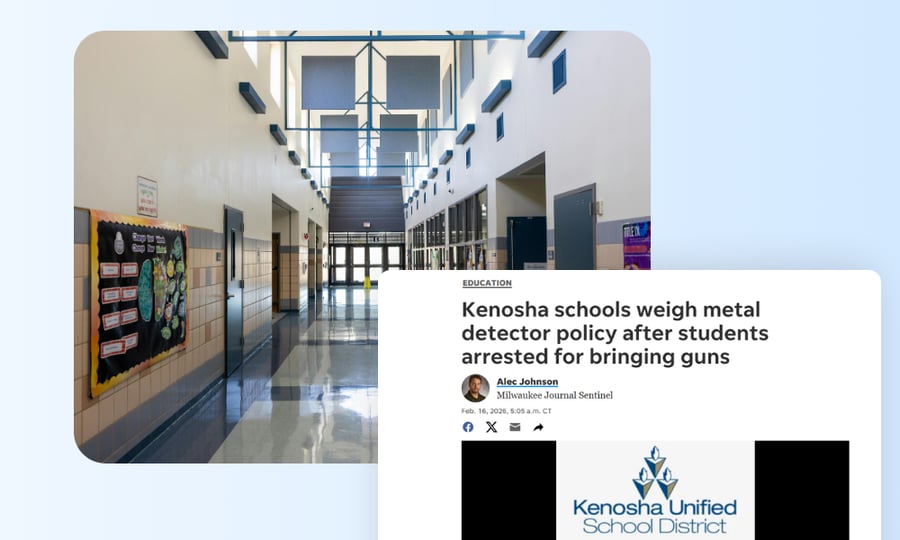
- Kenosha school district officials are actively evaluating metal detector implementation following recent student arrests for bringing firearms to campus
- The incident highlights critical gaps in current perimeter security measures at educational institutions
- School administrators face mounting pressure to balance open learning environments with comprehensive threat detection
- The timing coincides with broader national discussions about modernizing school security infrastructure
Kenosha School District Security Response Details
The Kenosha Unified School District in Wisconsin is weighing the implementation of metal detector policies after multiple students were arrested for bringing guns onto school property. According to reporting from the Milwaukee Journal Sentinel, district leadership is now actively considering enhanced security screening measures.
The Kenosha Unified School District serves approximately 21,000 students across southeastern Wisconsin. The district operates multiple high schools, middle schools, and elementary campuses throughout Kenosha County.
District officials have not yet specified which schools would receive metal detectors or outlined implementation timelines. The arrests represent a significant escalation in security concerns for a district that has historically maintained relatively open campus access policies.
Why Kenosha's Response Matters for School Security Planning
The Kenosha situation reflects a critical inflection point facing school districts nationwide. Traditional metal detector installations often create bottlenecks during peak arrival times, requiring additional staffing and operational adjustments.
Modern educational facilities increasingly require security solutions that maintain welcoming environments while providing comprehensive threat detection. The challenge extends beyond simple weapon screening to encompass broader behavioral threat assessment capabilities.
Schools evaluating similar upgrades must consider detection accuracy, processing speed, and integration with existing safety protocols. False positive rates and student privacy concerns also factor into technology selection decisions.
Contemporary security planning emphasizes layered approaches combining perimeter monitoring, access control, and real-time threat identification. These integrated systems provide administrators with actionable intelligence rather than simple binary detection alerts.
Lessons from Kenosha's Security Evaluation
Educational institutions can extract several key insights from Kenosha's current security assessment process:
Proactive Policy Development
Districts benefit from establishing security upgrade frameworks before incidents occur, enabling faster response when threats emerge.
Community Stakeholder Engagement
Successful security implementations require input from students, parents, faculty, and local law enforcement agencies throughout the planning process.
Technology Integration Planning
Modern security systems should complement existing emergency response protocols rather than creating additional operational complexity.
Scalability Considerations
Security solutions must accommodate varying campus sizes, student populations, and architectural constraints across district facilities.
The most effective approaches combine automated threat detection with human oversight, ensuring rapid response capabilities while maintaining appropriate educational atmospheres.
School security leaders should evaluate solutions based on detection accuracy, operational efficiency, and long-term maintenance requirements. Implementation success often depends on seamless integration with current safety procedures and staff training programs.
VOLT's AI-powered security platforms help educational institutions identify and respond to potential threats while preserving positive learning environments.
Concerned about weapon detection capabilities? Learn how AI-powered systems identify threats in real-time at our Gun and Weapon Detection Resource Center.
Editorial Disclosure: This article was produced with AI assistance and reviewed by VOLT AI editorial team. News sources are linked for verification. VOLT AI provides AI-powered security solutions for educational institutions, healthcare facilities, and residential communities. For more information, visit volt.ai.