

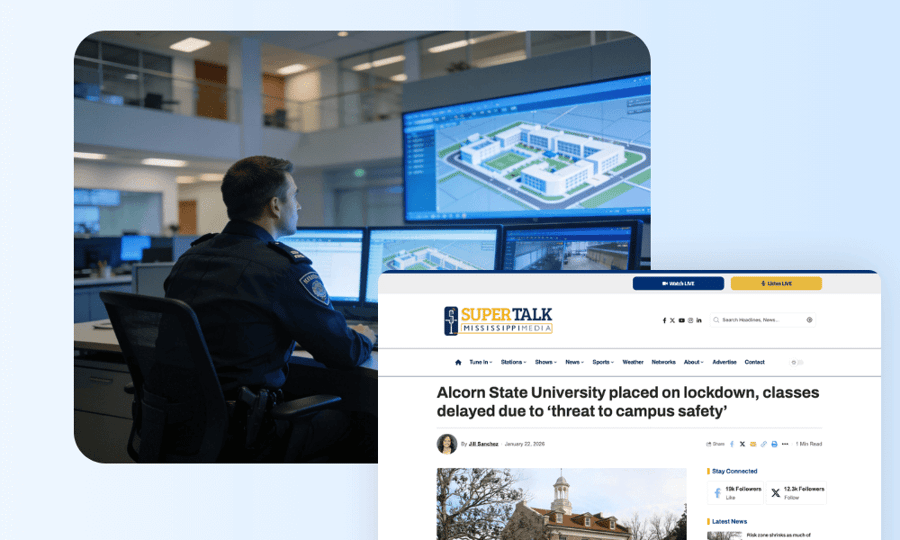
The Alcorn State Incident: Critical Lessons for HBCU Safety Leaders
- Alcorn State University implemented immediate lockdown procedures and delayed classes due to an unspecified campus safety threat on January 22, 2026
- The incident highlights vulnerability gaps that many Historically Black Colleges and Universities (HBCUs) face with limited security resources and aging infrastructure
- Response protocols activated quickly, demonstrating the importance of established emergency communication systems for student and faculty safety
- This event underscores the need for proactive threat detection technology that can identify risks before they escalate to lockdown situations
Inside the Alcorn State Campus Emergency Response
Alcorn State University, located in Lorman, Mississippi, placed its entire campus on lockdown early Thursday morning due to what officials described as a "threat to campus safety." The university serves approximately 3,000 students and sits on a 1,700-acre rural campus along the Mississippi River.
According to reports from SuperTalk FM, the lockdown prompted immediate class delays as administrators prioritized student and staff safety. The university activated its emergency notification systems to keep the campus community informed during the developing situation.
As Mississippi's first state-supported institution for African American students, founded in 1871, Alcorn State represents one of the nation's prominent HBCUs. The institution's sprawling campus includes multiple academic buildings, residence halls, and athletic facilities that require comprehensive security coverage during emergency situations.
The nature of the specific threat has not been publicly disclosed, following standard protocol for active investigations. Campus security worked alongside local law enforcement to assess and address the situation before normal operations could resume.
Why Rapid Threat Detection Matters for HBCU Campuses
This incident illuminates a critical challenge facing many HBCU institutions: balancing comprehensive security needs with constrained budgets and resources. Unlike larger state universities or well-funded private institutions, HBCUs often operate with limited security personnel and aging infrastructure that can complicate emergency response efforts.
The rural location of Alcorn State's campus presents additional security considerations. Remote campus settings can extend emergency response times and require self-sufficient security systems that can detect, assess, and communicate threats independently before external help arrives.
Recent data shows that 67% of HBCU campuses report inadequate security funding compared to predominantly white institutions of similar size. This resource gap becomes particularly concerning during incidents that require immediate lockdown protocols and comprehensive threat assessment capabilities.
Modern threat detection technology addresses these disparities by providing 24/7 automated monitoring that doesn't rely on increased staffing costs. AI-powered systems can identify suspicious activities, unusual behavioral patterns, or potential security risks across multiple campus locations simultaneously.
Response Protocols After Campus Safety Incidents
The Alcorn State lockdown demonstrates several critical security planning elements that all higher education institutions should evaluate. Emergency communication systems must reach students, faculty, and staff across dormitories, academic buildings, dining facilities, and recreational areas within minutes of threat identification.
Campus security teams need clear escalation procedures that define when to implement lockdown protocols versus other protective measures. These decisions often happen rapidly and require reliable threat assessment data to avoid unnecessary disruption while ensuring adequate protection.
Post-incident analysis becomes crucial for identifying security gaps and improving future response capabilities. Institutions should examine detection timeframes, communication effectiveness, and coordination between campus security and external law enforcement agencies.
Technology integration plays an increasingly vital role in these protocols. Real-time monitoring systems can provide security teams with immediate situational awareness, helping them make informed decisions about appropriate response levels and resource deployment.
VOLT's AI detection system has helped institutions like Robinson ISD identify threats in under 3 seconds, enabling faster response times that can prevent incidents from escalating to campus-wide emergencies.
Looking to enhance campus safety with AI-powered solutions? Explore our Campus Safety Resource Center at https://volt.ai/resource-center-ai-powered-campus-safety for implementation guides, case studies, and technology comparisons.

Editorial Disclosure: This article was produced with AI assistance and reviewed by VOLT AI editorial team. News sources are linked for verification. VOLT AI provides AI-powered security solutions for educational institutions, healthcare facilities, and residential communities. For more information, visit volt.ai.