Insights
From First Flag to Handoff: Working a Live Floor-Plan Track on Campus
VOLT is built to notice moments: a fall, a fight, someone where they shouldn’t be.
VOLT tracks a person by visual appearance across the camera footprint and shows that track on a 3D floor plan, so first responders reach where the situation is unfolding now, not where it started.
The same cameras also cover the rare, serious case. VOLT detects handguns, long guns, and knives that are visible to the camera. Most of what follows, though, is about the ordinary nights when a small team just needs to know where to go.
VOLT is designed to work with most IP cameras you already have. By default, a VOLT reviewer checks it before your team is notified.
What happens next is up to your people. Here is one way a campus team can run that stretch of time, from the first flag to the handoff.
1. The first flag: decide who owns it
It is a little after nine on a weeknight. A flag comes in: someone is moving through a classroom building that locked at eight. The first decision is not technical. It is who owns this one. Many campus teams name a single person on each shift, often the supervisor or whoever is at the desk, to hold the track while others move. One owner keeps the picture from splitting into three conversations on the radio.
2. Read the track before you move
Before anyone heads out, the owner takes a few seconds with the floor plan. Which building, which floor, which wing? Which way is the person moving, and how long ago did the track start? The point of a track is the difference between where something began and where it is now. A person first seen at a side entrance may already be two corridors away.
3. Send people to where it is now
The owner points officers or building staff to the current spot, not the starting point, and names the route: “North stairwell, second floor, heading east.” Shared landmarks matter. Teams that agree ahead of time on how they name stairwells, wings and entrances spend less time translating the map into words.
4. Keep updating while people are in motion
A track keeps moving after the first call. The owner stays on the floor plan and gives short updates as the person moves from one camera view to the next. Officers on foot don’t have to watch a screen. They listen for the next landmark.
5. Hand off cleanly
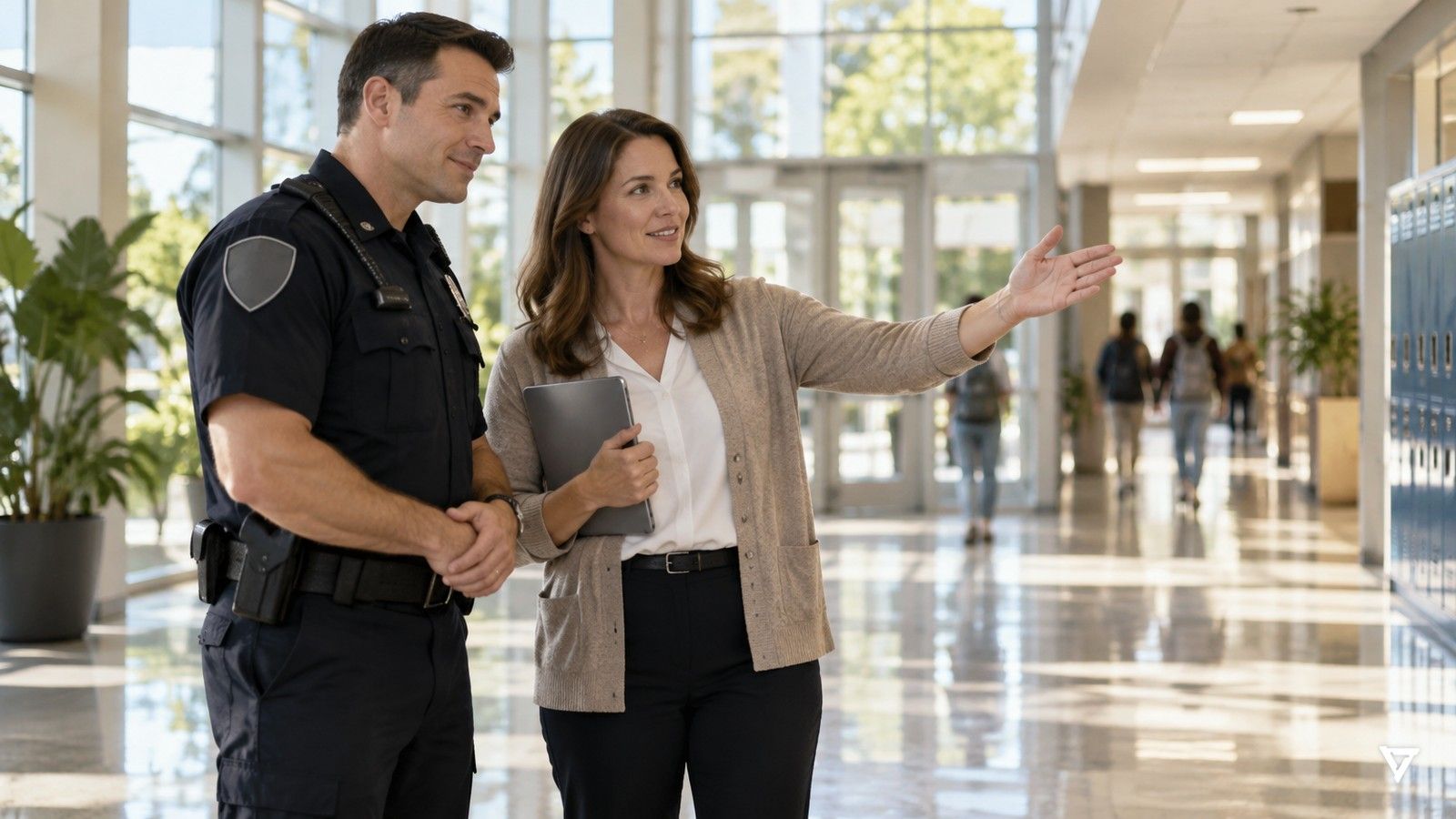
When your school resource officer or another member of your own safety team arrives, the handoff is the moment that most often goes wrong. They need three things: where the person is now, how they got there, and which entrance gets them closest. The floor plan shows all three on one screen, so the briefing at the door can be short and specific.
6. Close it out and learn from it
Most flags end quietly: a custodian working late, a student who left a laptop behind. Close the flag, note what happened, and once a month look at the pattern. Which doors keep coming up? Which buildings keep getting late visitors? That review is where the floor plan pays off between incidents.
The same routine works for everyday moments
The steps above don’t change much for ordinary moments. A fall on the library stairs late at night is the same sequence: one owner, a quick look at the map, the nearest person sent to the right landing. A fight starting outside a residence hall follows the same steps. Practicing the routine on small, everyday moments is what makes it feel natural on the rare night it matters most.
Built for education
VOLT is built for education: school districts and college and university campuses. Campus teams are often small and responsible for a lot of ground, from residence halls and labs to parking areas and athletic fields. A shared floor plan gives them a calmer way to coordinate. A force multiplier for lean teams.
See it on your campus
Want to walk through this routine with your own buildings? Book a VOLT demo and bring your campus map.
Helping schools and campuses look out for the moments that matter.