Insights
Game-Day Mutual Aid: Sharing Video Context With City Police and Partner Agencies
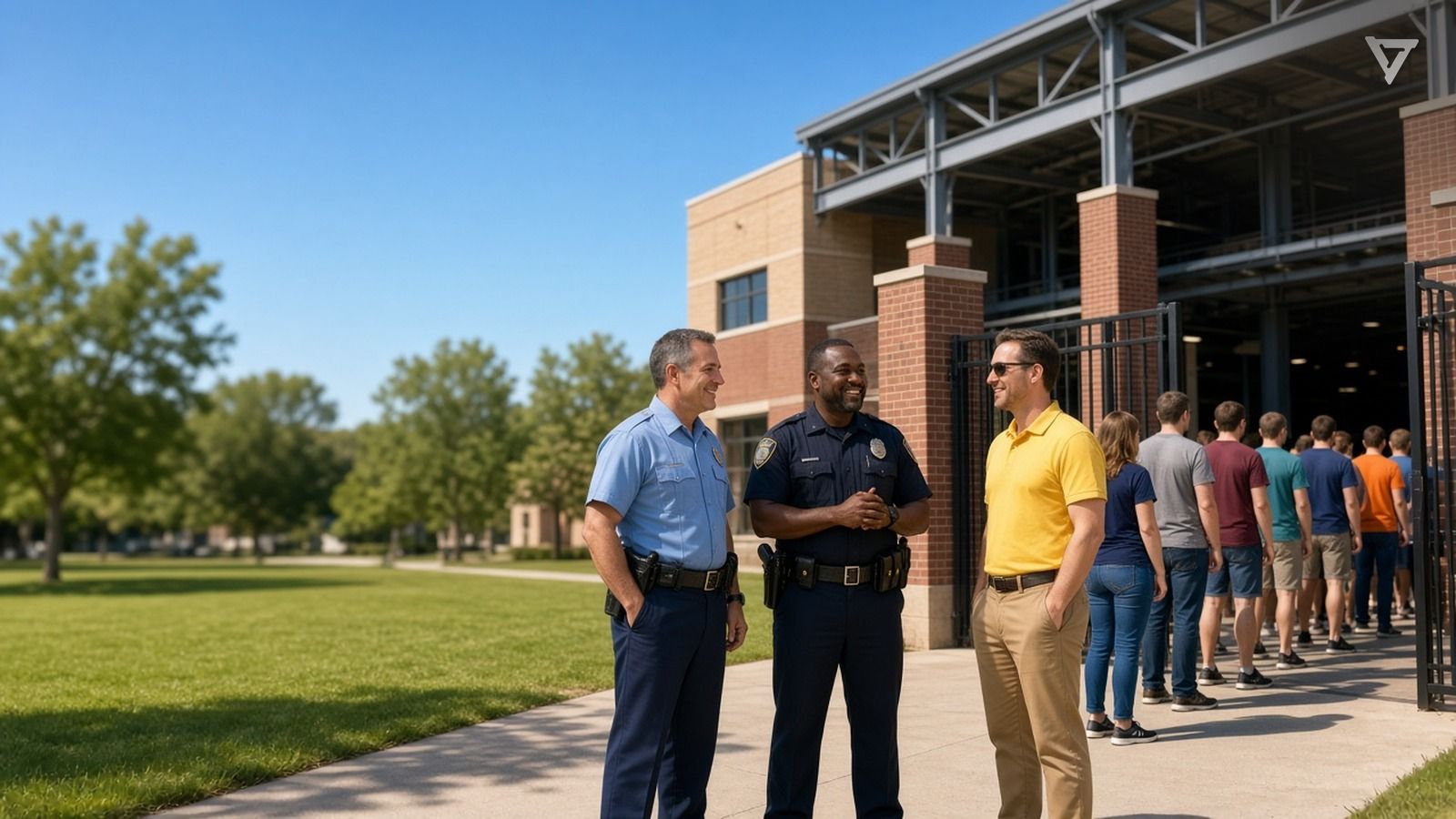
On a home game day, a campus police department works with others. City police handle traffic and the streets around the stadium. County deputies or state troopers may cover the highway exits. Fire and EMS stage near the gates, and an event staff contractor runs the turnstiles. Everyone is working the same few hours, on the same few blocks, across different radio channels.
Mutual aid agreements set out who can help whom. What agreements don't always spell out is how each agency sees what the others see. This piece covers the practical side: who needs which camera views, when to share them, and how to keep the handoff simple on a busy afternoon. The goal is the same as on any other shift: get the right people to the right place at the right time.
Start with the plan, not the cameras
Before anyone talks about video, the partner agencies should agree on the basics in writing:
- Who leads at the stadium and who leads on the surrounding streets.
- Where the joint command post sits, and who from each agency is in the room.
- Which radio channel everyone uses for event-wide traffic, and when to switch.
- Who can ask for help, from whom, and how that request is logged.
Video sharing works best when it sits inside that structure. A camera view is useful when the person watching it already knows who acts on what they see.
Decide which views each partner needs
Not every agency needs every camera. A short list keeps screens readable and keeps attention where it belongs.
- Gates and queues: event staff and campus police watch lines at each entrance, so they can open another lane or move staff before a line spills into the street.
- Perimeter streets and crosswalks: city police watch the blocks where fans walk in from parking and transit, especially at the end of the game.
- Parking lots and garages: campus police and parking services watch for a crowd forming around tailgates or a person somewhere they shouldn't be after the lots close.
- EMS staging and access routes: fire and EMS need clear views of the lanes they use to get in and out.
Write the list down by agency and by camera name, and use the same names the dispatch center uses. On game day, "Gate C, north queue" should mean the same thing to everyone in the room.
Share context, not just a feed
A raw feed on a wall of screens is hard to use. What partners need in the moment is context: what happened, where, and which camera shows it now.
AI camera software can help with this by flagging specific moments on the camera footprint, so the camera view and location can reach the people your team has chosen to notify. VOLT is built to notice moments: a fall, a possible fight, someone where they shouldn't be. On game day, that can include a crowd forming at a gate.
VOLT is built to run on the cameras you already have.
Say VOLT sends a Crowd forming alert for Gate C, north queue. Every notification is human verified. The team then sees a clear moment, not a stream of noise.
The value in a mutual aid setting is that each alert can reach the people your team has chosen to notify. Everyone works from the same view of the same place.
Plan for the serious moment
Day to day, game-day alerts are about lines, crowds and a gate that needs another staff member. The plan should still cover the serious moment that changes the day. VOLT detects handguns, long guns, and knives that are visible to the camera. Agree in advance who receives that kind of alert, who confirms it, how the location is passed to city police over the radio, and who holds the command decision until the situation is resolved.
Rehearse that handoff before the season, not during the first home game. A short tabletop with each agency's game-day leads, walking through a few scenarios with real camera names, will surface gaps in channels, staging and authority. If your campus already uses the Standard Response Protocol, build the game-day handoff around the same shared terms.
Keep access and records clear
Sharing video across agencies raises fair questions, and it is better to answer them before game day:
- Access: which partner users can see which cameras, and for which hours. Decide in advance when shared access ends, ideally when the event ends.
- Requests for footage: how a partner agency requests saved video after the event, and who on campus approves it.
- Policy: which campus policies govern video use at events, and who answers questions from students, staff or the public.
Your general counsel and records office should sign off on these steps. The goal is simple: partners see what they need during the event, and every later request follows a written process.
A short game-day checklist
- Written roles for campus police, city police, EMS and event staff.
- One shared list of camera names by agency.
- An agreed list of who is notified for each kind of alert.
- A rehearsed handoff for the serious alert.
- Clear access windows and a written footage request process.
- A short debrief after each home game to adjust camera lists and who is notified.
Mutual aid on game day comes down to the goal on any other shift: get the right people to the right place at the right time. Shared video context, used inside a clear plan, makes that easier for every agency working the event.
To see how VOLT could support your game-day plan, request a demo.