Insights
Night-Shift Beats: Planning Campus Police Patrol Routes for the Overnight Hours
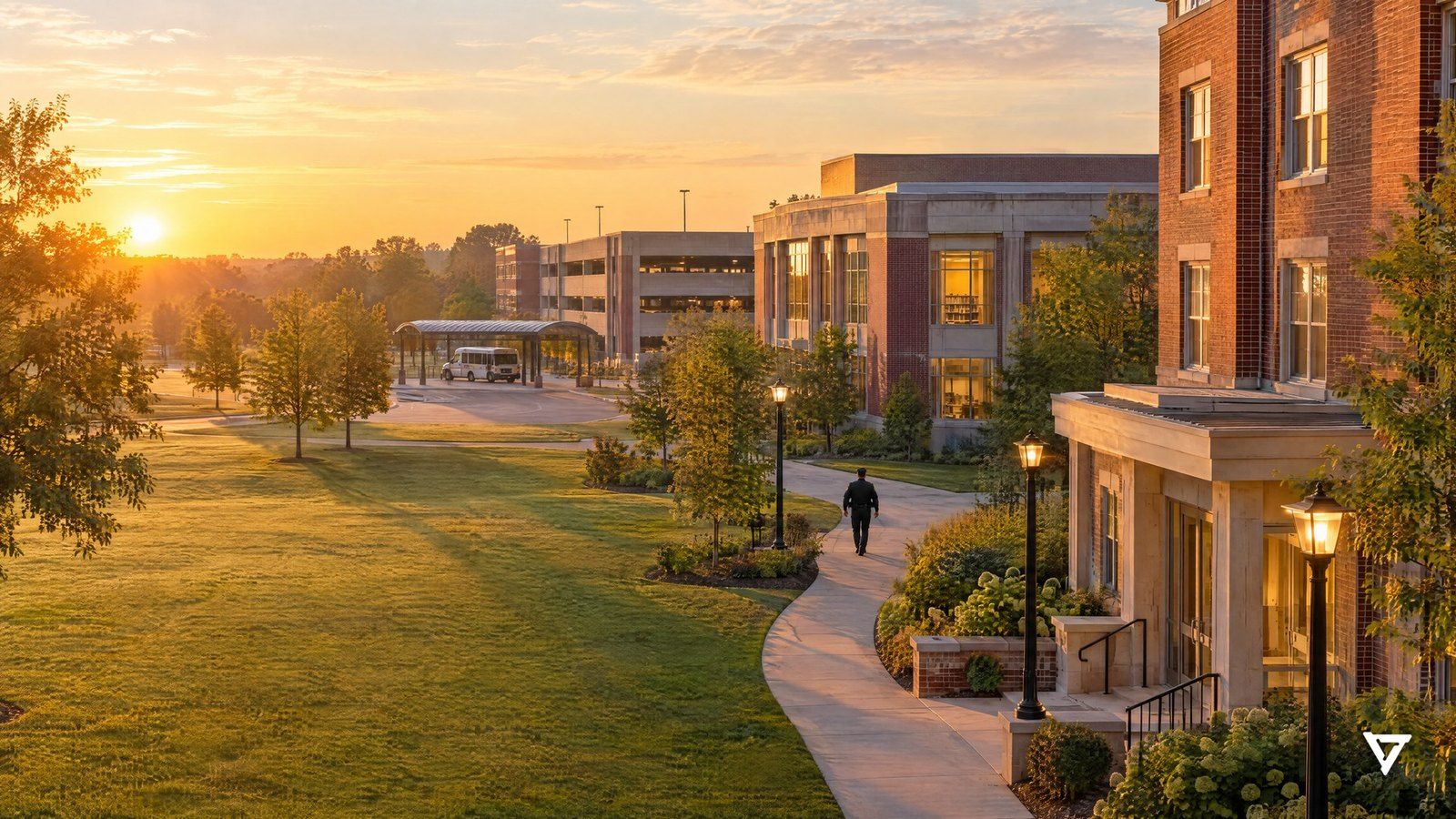
Between midnight and sunrise, a campus changes shape. The lecture halls go dark. The library may stay open late, or it may close and leave a stream of students walking back. Residence halls get louder and then quieter. Parking decks empty out except for the late shift and a few visitors. And the people covering all of it are usually a small overnight squad, a dispatcher and a supervisor.
This guide is about planning those overnight beats on purpose. It’s written for chiefs, lieutenants and shift supervisors. Most of it applies whatever tools your department uses.
1. Start with place and time, not the map
The old habit is to divide the campus map into equal slices and give each officer a slice. That’s simple, but it spreads people evenly across places where trouble doesn’t happen evenly.
Policing research has said this for a long time. The National Institute of Justice’s summary of hot spot policing notes that crime and disorder cluster in small areas, and also at certain times of the day or week. It also reports that focused attention on those places did not simply push problems around the corner (NIJ, “Hot Spot Policing Can Reduce Crime,” archived 2009).
For an overnight beat plan, that means:
- Pull your own calls for service and incident reports by hour and by location for the past few semesters. Look at the hours after midnight separately from the evening.
- Mark the handful of places that keep showing up. On most campuses that short list fits on one page.
- Note the calendar effects. Weekends, the first weeks of a term, finals, home games and the nights before breaks often look different from an ordinary Tuesday.
Your beats should come from that list, not from building footprints.
2. The zones that usually earn a place on the overnight list
Every campus is different, but four kinds of places come up again and again after dark.
Residence halls. Entrances, lobbies and the paths between halls see the most foot traffic late at night. Many of the calls are welfare calls rather than crimes: someone who has had too much to drink, a resident locked out, a student who isn’t okay. Plan regular, visible walk-throughs of entrances and exterior paths, and agree with residence life on who checks what inside.
Parking lots and decks. The ASU Center for Problem-Oriented Policing guide on thefts in parking facilities points to poor lighting, blind spots, open pedestrian access and little natural oversight as risk factors. It also notes that lots serving college campuses may face higher risk (Clarke, Thefts of and from Cars in Parking Facilities, POP Center Guide No. 10). Use that list when you decide which lots get a drive-through and which get a foot check. Report lighting problems to facilities the same night.
Libraries and late-study spaces. The risk is often at closing time: groups leaving at once, people staying behind, and students walking alone to parking or transit. Schedule a unit near the main exits for the half hour around closing.
Transit and shuttle stops. Late shuttles, city bus stops at the campus edge and rideshare pickup points gather people who are waiting, tired and often alone. These spots tend to sit on the line between your jurisdiction and the city’s, which matters for section 5.
3. Staffing realities: plan for the squad you actually have
Overnight shifts are where staffing is thinnest. A good beat plan is honest about that.
- Plan coverage by priority. Write down which zones must be covered every hour, which every few hours, and which only on certain nights. When someone calls out sick, the supervisor can drop the lowest tier without redrawing the whole plan.
- Vary the timing. Predictable rounds are easy to work around. Keep the list of places fixed and change when officers arrive.
- Protect time for the calls you can’t plan. Welfare checks, lockouts and escort requests use up much of the night. If the beat plan fills every minute, it will fall apart by 1 a.m.
- Use non-sworn staff where it makes sense. Security officers, student patrol programs and residence life staff on call can cover the walk-throughs, so sworn officers stay free for calls that need them.
4. Handoffs with dispatch
Overnight, the dispatcher is often the only person who can see the whole picture. Beat plans work better when dispatch helped write them.
- Share the priority list with dispatch. Then dispatchers know which zone is uncovered when an officer is tied up, and can suggest a reroute.
- Agree on a standard handoff. When dispatch sends an officer, it should pass on location, what was seen or reported, which direction the person went, and what else is going on nearby. The same order every time keeps it fast.
- Close the loop. Officers report back to dispatch when a call is cleared, so the board shows who is free.
- Write it down. Departments with a campus police or security function keep a daily crime log, and the U.S. Department of Education describes what goes in it (Clery Act Appendix for the FSA Handbook). Clean dispatch notes taken during the night make that record easier for the team that compiles it. Your institution’s Clery team decides what is reported and how.
5. Know where your beat ends and the city’s begins
Overnight trouble doesn’t stop at the campus boundary. Students live, walk and wait for rides on the blocks next to campus.
The Bureau of Justice Statistics survey of campus law enforcement found that most sworn campus officers had arrest and patrol jurisdiction beyond campus boundaries, and that about 7 in 10 agencies had a memorandum of understanding or other formal written agreement with outside law enforcement (BJS, Campus Law Enforcement, 2011–12, January 2015).
Whatever your own arrangement is, the overnight plan should answer:
- Which streets and stops at the edge does your department cover, and which does the city cover?
- Who calls whom, and on which channel, when an incident crosses the line?
- Do overnight supervisors from both agencies know each other by name?
6. Review the plan every term
Treat the beat plan as a living document. Each term, look at where the calls came from and when, ask officers which places felt under-covered, and adjust. Ten minutes in a shift briefing is often enough to catch what the data misses.
Where VOLT fits
Maryville University’s Vice President for Student Life described the problem every overnight supervisor knows: “With our small staff, we can’t possibly be everywhere at the same time. We weren’t monitoring everything before. Now VOLT allows us to have our eyes and ears in most places.” (Maryville University case study)
VOLT is built to notice moments: visible weapons, crowds forming, theft, and vandalism. On an overnight shift, that’s a second set of eyes on the residence hall entrance or parking deck an officer passed twenty minutes ago. VOLT shows where a flagged moment is happening on a 3D floor plan, so first responders reach where it's unfolding now. As a proof point for the rarest calls: VOLT detects handguns, long guns, and knives that are visible to the camera. VOLT is built to run on the cameras you already have, and it can integrate with any system that has an open API. Tell us what you run and we'll confirm the fit. By default, a VOLT reviewer checks each moment before your team is notified, so dispatch gets a moment worth sending an officer to.