Insights
School Vandalism Reports: Turning a Year of Data Into an After-Hours Plan
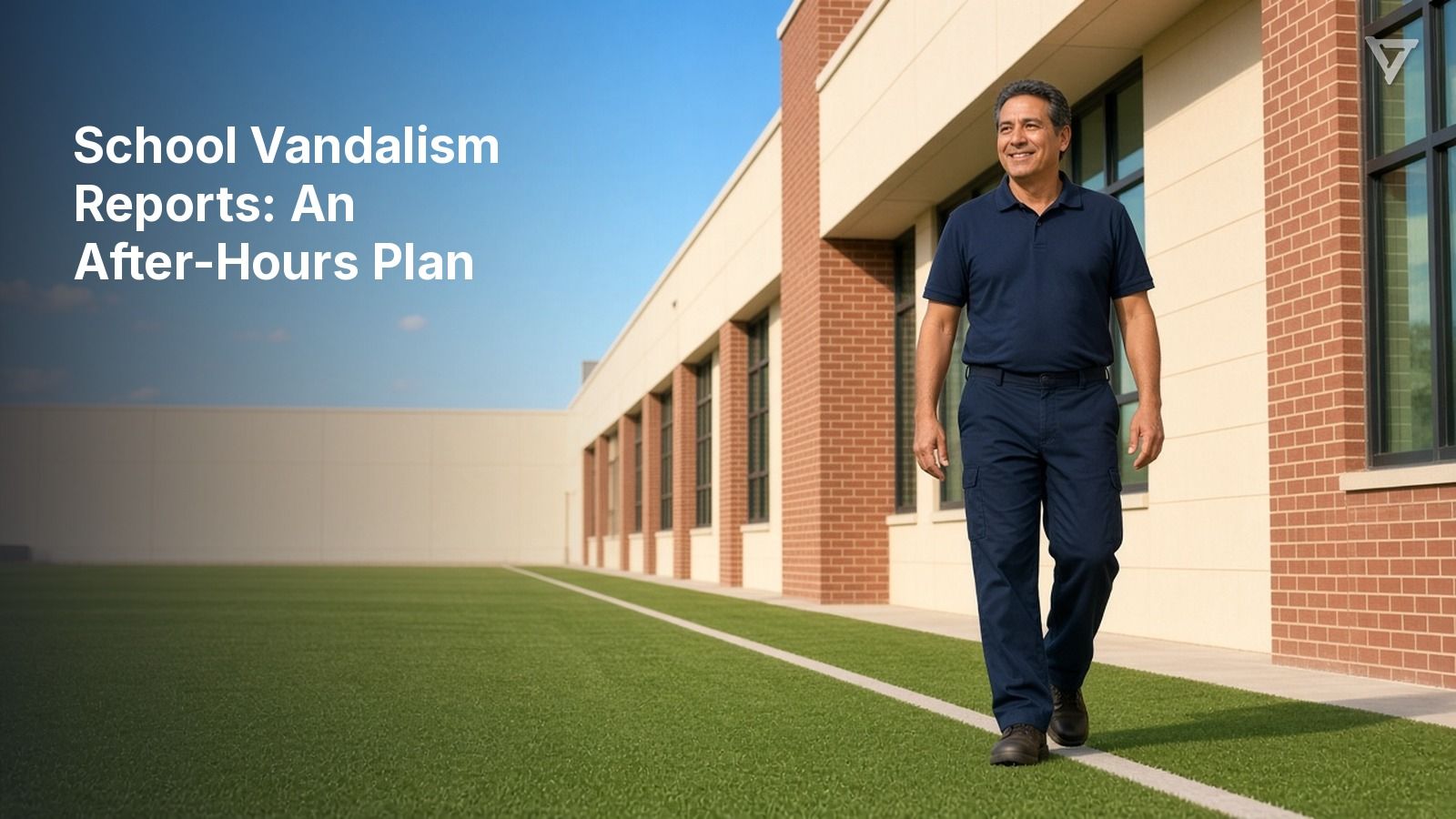
A school vandalism report may be read once a year, but it can also tell a district where its people should be looking after the building empties.
What one district reported
In an October 8, 2025 information sheet to its Strategic Directions Committee, Nanaimo Ladysmith Public Schools in British Columbia reported 355 vandalism events with a total cost of $63,773 for the 2024/25 school year, compared with 391 events and $53,504 the year before. The district said a new reporting system now tracks and classifies vandalism more accurately, and that 2024/25 will be its new baseline.
The report lists the forms vandalism takes, including building damage, graffiti, window breakage, grounds damage, theft and building systems damage. It also notes that there is no specific vandalism budget: costs are covered by the affected department, so vandalism costs directly represent less funding spent in the classroom.
The district described what it already does: immediate graffiti removal with a photo database, anti-vandalism coatings, anti-climb protection for roofs, overnight patrols adjusted to targeted areas, coordination with city partners, and a daily check of sites of concern before school starts. New this year are solar-powered mobile cameras for areas with frequent after-hours damage, and monthly vandalism data sent to key staff in the Facilities and Learning Services departments.
Why the yearly number isn't enough
A total tells the board how much was spent. It doesn't tell the facilities team which corner of which campus gets hit, at what hour, or who should have heard about it while it was happening. Damage like this may not be found until the next morning, after the cost is already set.
Questions to ask about your own report
- Places: which sites and which spots (a band room, a turf field, a back entrance, a covered area) show up again and again?
- Hours: when does the damage happen, and who from your team is on call then?
- Shared spaces: which fields or facilities are shared with a city or community group, and who is responsible after hours?
- Cameras: do the cameras you already have look at those repeat spots, or only at front entrances?
- Morning discovery: when staff find damage, how quickly can they find the footage and the time it happened?
Where VOLT fits
VOLT is built to run on the cameras you already have.
When someone is on a site outside the hours your team has set, VOLT can flag it as Person detected after hours, and possible vandalism or theft as Possible vandalism or Possible theft. Every notification is human verified. Each alert can reach the people your team has chosen to notify, with the camera view and the location, so the on-call person can hear about it that night, not only the next morning.
That way your team can see where and when possible moments happen, and plan next year's after-hours coverage around them. To see how this works for your district, request a demo.
VOLT detects handguns, long guns, and knives that are visible to the camera.