Insights
Planning School Cameras for Busy Outdoor Areas, One Phase at a Time

Most small districts don't get every camera they want in one year, so the real planning question is which outdoor spaces to cover first and how to make that first phase useful on an ordinary school day.
A small district's plan, in one agenda line
At its March 16, 2026 regular meeting, the Chokio-Alberta Board of Education in Minnesota was asked to consider a summer project to install a digital camera system throughout the school. The agenda says the project is fully funded by a cyber security grant, that cameras would go in hallways, entrances, and busy outside areas of the school grounds, and that the work includes preparation to add more cameras in the future if more funding becomes available.
That last part is how a lot of districts actually build coverage: a grant pays for phase one, and the wiring and recording plan has to leave room for phase two. The outdoor areas are often the hardest to choose, because school grounds are wide open and the busy spots change through the day.
Start with where students actually are
Before anyone picks a mounting spot, walk the grounds at the times students use them. In a PreK-12 building, that usually means:
- Recess and the playground. One or two adults may be watching a big blacktop, a play structure, and a field at once. A young student who trips on the blacktop at the far end can be out of an aide's line of sight for a while.
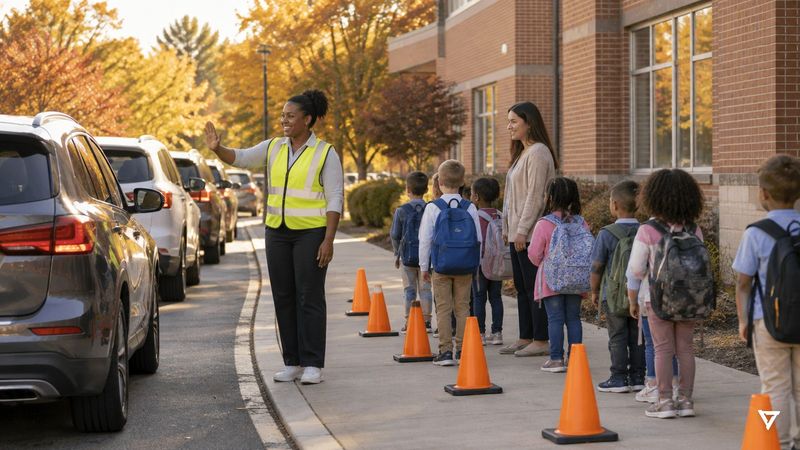
- Arrival and dismissal. The curb, the bus lane, and the walk to the door are packed for twenty minutes and empty the rest of the day.
- Paths between buildings or to the field. Short walks that feel routine, until two students start shoving on the way back from PE.
- The edges of the grounds. A gate, a back lot, or the space behind a gym, where someone who isn't part of the school day can end up without anyone noticing.
Rank these by how often students are there and how far they are from an adult. The first phase usually covers the places that score high on both.
Decide who looks, before you decide how many cameras
A camera that nobody is watching mostly helps after the fact. In a small school, the person who would look at a feed is often the principal, the office manager, or a teacher on duty, and none of them can sit at a monitor all day. So phase one should answer a few questions up front:
- Who gets told when something on an outdoor camera needs a look, and on which device?
- What should they do next: walk out, radio the aide on duty, or call the office?
- Which outdoor views matter most during recess and dismissal, and which matter after the buses leave?
- How long is footage kept, and who can review it? Most boards already have a video policy for this; the new cameras should follow it.
Writing these answers down is cheap, and it makes the first cameras useful on day one instead of only when someone goes back to search a recording.
Where VOLT fits
VOLT is built to notice moments: a fall, a fight, someone where they shouldn't be. On a playground, that might be a student who goes down and doesn't get back up, or a shove that turns into more. VOLT tracks a person by visual appearance across the camera footprint and shows that track on a 3D floor plan, so first responders reach where the situation is unfolding now, not where it started. As a proof point, VOLT detects handguns, long guns, and knives that are visible to the camera. VOLT works with most IP cameras, so a phase-one install and the cameras added later can feed the same view, and a VOLT reviewer checks a flagged moment before your team is notified.
Leave room for phase two
A few choices in the first phase make the next one easier:
- Plan network drops and power for the outdoor spots you're not funding yet.
- Pick a recording setup that can take more cameras without a full replacement.
- Keep a short list of the outdoor gaps you found on the walk, so the next grant application already says where the money goes.
- After a semester, ask the recess aides and the front office which views they actually used. Their answers are the best guide to what to add.
Cameras don't replace the adult on the playground or the plan the school already has. Phased in carefully, they give that adult a clearer view of the busy parts of the day.
If your district is planning the next phase of outdoor camera coverage, you can request a demo at https://volt.ai.
Helping schools and campuses look out for the moments that matter.