Insights
High School Football Game Security: Planning Game Day Beyond the Gate
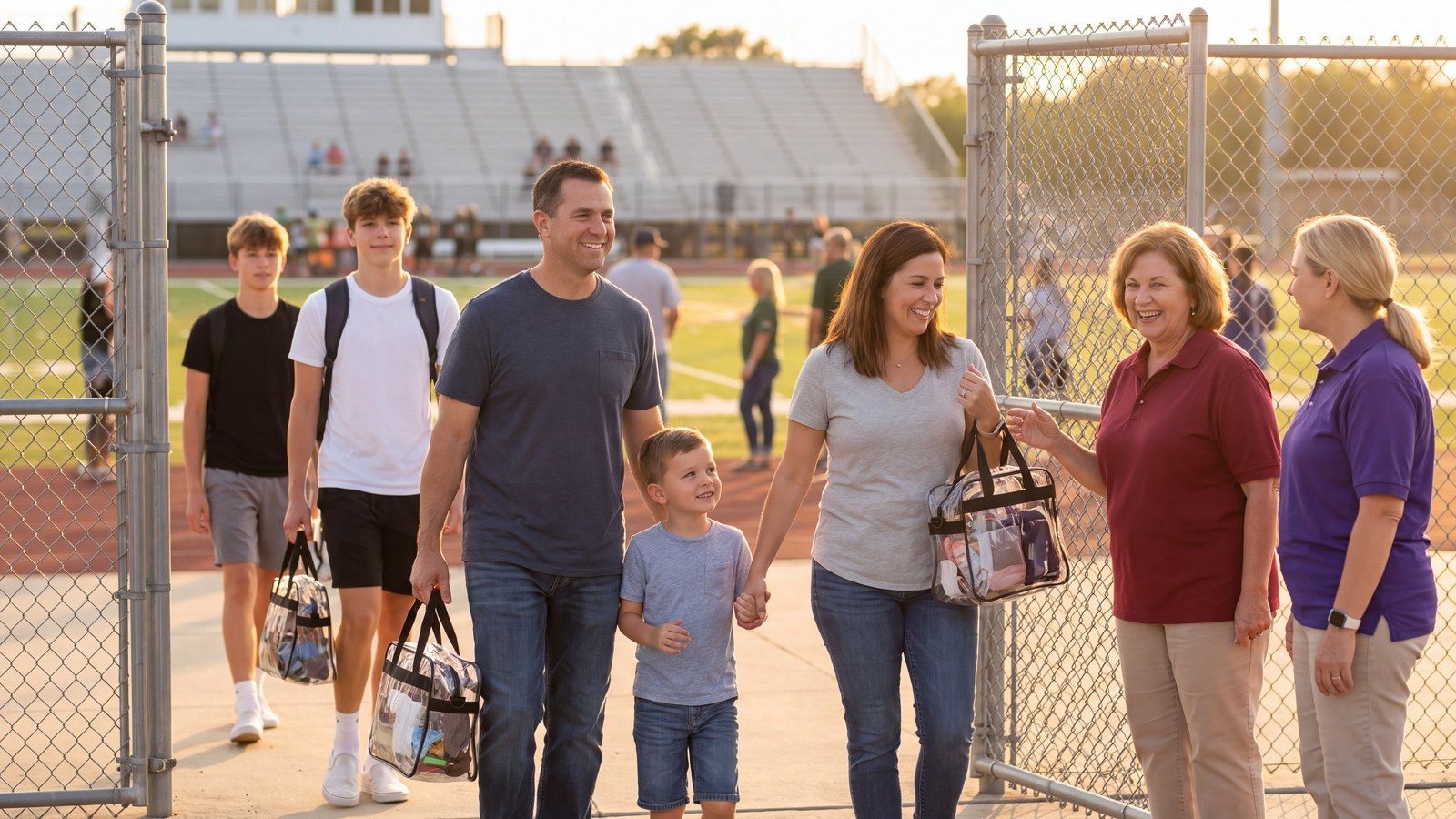
A clear bag rule makes the line at the gate move faster, but a good game day for families depends on everything after the ticket is scanned: the stands, the concession line, the restrooms and the walk back to the car.
What one board heard last fall
In late October 2025, the superintendent of Howland Local Schools in Ohio gave the Board of Education a short update on new safety steps for sporting events, according to the Tribune Chronicle's summary of the meeting. The district had announced the changes on Oct. 16 and used them at a football game and a soccer game. Spectators now bring a clear bag or nothing at all. Local police are assigned to separate areas of the stadium, and unlit corners of the stadium are roped off and patrolled. Metal detectors came up, but the district doesn't have the money for them, so the superintendent pointed to everyday vigilance as one of the best tools it has. Board members asked practical questions too, like whether athletes' gym bags count and what spectators can carry for personal items.
That is a buyer concern many districts share. The gate is getting attention, the budget is fixed, and the plan for the rest of the stadium rests on a handful of adults who also want to watch the game.
Where a home game actually gets busy
- The ticket line before kickoff. Bag checks, student IDs and cash sales all happen in the same few minutes.
- Halftime. The concession stand and restrooms fill at once, often out of view of the stands.
- The student section. High energy for four quarters, and the place where a group can grow fast.
- The final whistle. Everyone leaves together through the same gates and into the same lot.
- The morning after. Facilities staff find out what happened to the press box, the bleachers and the fence overnight.
Questions to settle before the next home game
- Which staff, volunteers and officers cover the gate, the stands, the concession area and the lot, and who covers each spot when someone steps away?
- Which parts of the stadium can no adult see from where they're posted, and are those closed off, lit or walked on a schedule?
- How do posted adults reach each other quickly, and who decides when to move people from one area to another?
- What does the plan look like for a junior varsity game with half the staff?
- Which camera views already cover the gates, the concourse and the parking lot, who looks at them on game day, and how long is that footage kept under the district's existing policy?
A clear bag rule takes one board meeting. These answers decide whether a home game feels easy for families every week of the season.
Where VOLT fits
VOLT is built to notice moments that matter: crowds forming, theft and vandalism. On game day, that could be a crowd forming at the exit gate after the final whistle, a cash box taken from an unattended concession table, or damage to the bleachers or press box after everyone has gone home. Weapon detection runs on the same cameras: VOLT detects handguns, long guns, and knives that are visible to the camera. VOLT is built to run on the cameras you already have. Each alert is reviewed by a person by default before your team is notified. That way, the adults working the game can stay where they are until they're needed.
Keep game day about the game
Most of what makes a home game feel safe is ordinary: friendly adults at the gate, clear rules everyone knows, and staff who can see the places people gather. When the posts, the sightlines and the camera views are planned together, families get a good night out and the people working it know where to look.
If your district is planning athletic event safety for the next season, you can request a demo at https://volt.ai.
Helping schools and campuses look out for the moments that matter.