Insights
College Event Security: A Practical Plan for Game Days, Concerts and Commencement
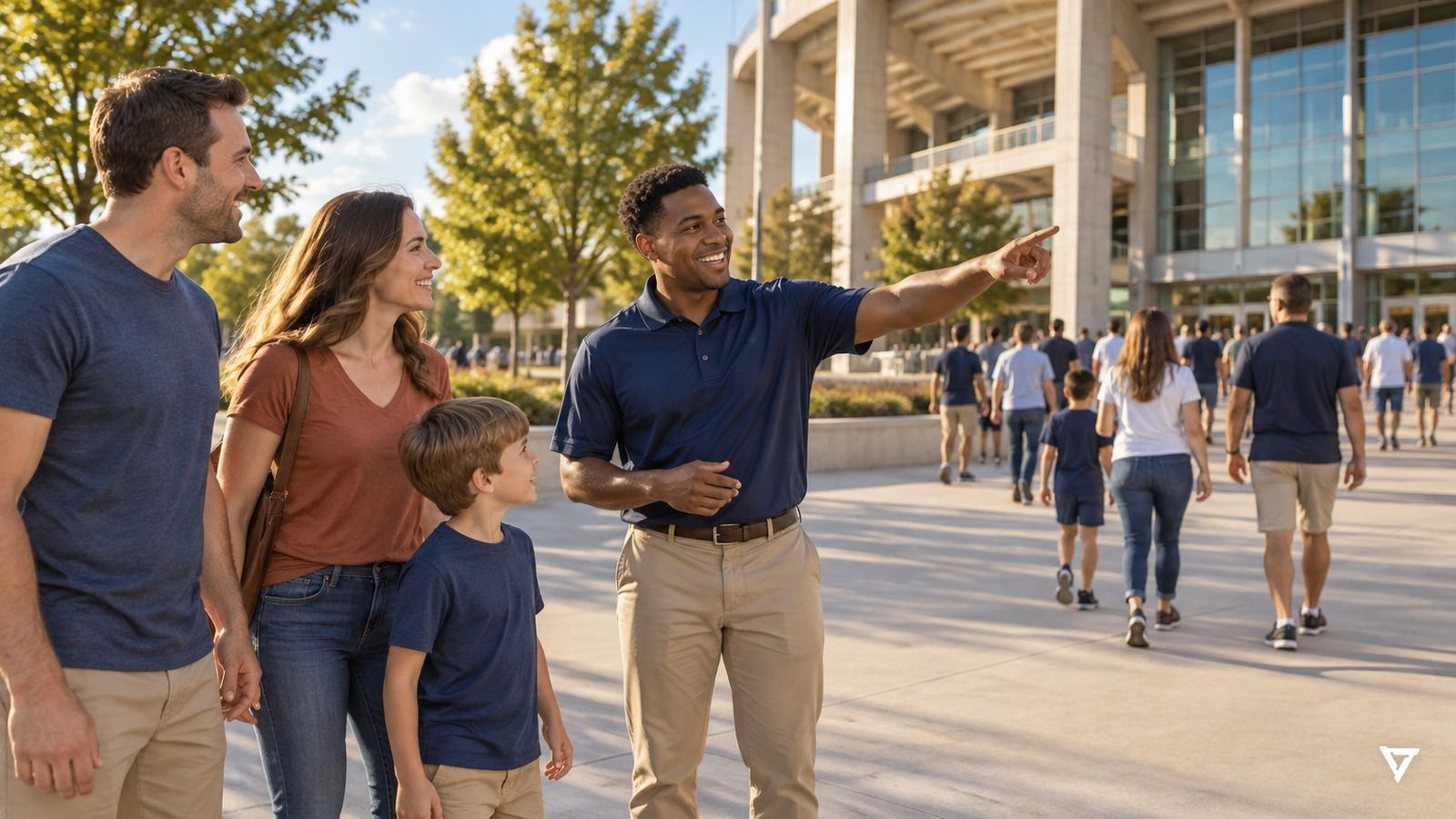
A home football game, a spring concert on the quad, a commencement ceremony with grandparents in the stands. College events bring thousands of people onto campus for a few hours, many of whom have never been there before. Most of what goes wrong is ordinary: someone faints in the heat, a child gets separated from a parent, a disagreement in the student section turns into shoving, a fan wanders into a loading dock looking for a shortcut. Good college event security is built around those everyday moments first, with clear plans for the rare serious one.
This guide walks through how campus public safety, athletics, student affairs and facilities teams can plan event security together, from the first planning meeting to the after-action review.
What college event security covers
Event security on a campus is different from a stadium run by a professional team. The venue might be a purpose-built arena, but it might also be a lawn, a ballroom, or a residence courtyard set up for one night. The crowd is a mix of students, alumni, families and the general public. And the people running the event often have day jobs elsewhere on campus.
A workable plan usually covers six things:
- Risk assessment: what kind of event it is, who is coming, how many, and what could realistically happen.
- Roles and command: who is in charge on the day, who makes the call to pause or evacuate, and how decisions are passed along.
- Site and crowd flow: entries, exits, queues, accessible routes, restricted areas and how people leave at the end.
- Entry policy: tickets, bag rules, prohibited items and screening.
- Medical and weather readiness: first aid, AED locations, heat and lightning plans.
- Communications: radios, a shared picture of what is happening, and public messaging.
For the broader picture of how a campus security program fits together across buildings and teams, see our campus security systems guide. This post stays focused on the event itself.
Start with a risk assessment for the specific event
Not every event needs the same plan. A sold-out rivalry game and a 200-person lecture need different staffing, but both benefit from the same questions asked early:
- How many people are expected, and how quickly will they arrive and leave?
- Is alcohol involved, on site or at nearby tailgates?
- Is the event indoors, outdoors, or both? What is the weather forecast?
- Are there high-profile guests, speakers or performers?
- Has there been anything in the news, on social media or in campus reporting that changes the picture?
The U.S. Cybersecurity and Infrastructure Security Agency (CISA) offers a free Mass Gathering Security Planning Tool that walks event planners through these questions and produces a checklist. CISA's Securing Public Gatherings page collects related guides. For the public safety agencies involved, FEMA's free online course IS-15.B, Special Events Contingency Planning for Public Safety Agencies, covers how to plan for events with outside partners.
Roles: who does what on event day
Most problems at college events become bigger problems because nobody knew who was supposed to act. Write down, before the event:
- An event lead with authority to delay, pause or end the event.
- A public safety lead, often from campus police or campus security, who coordinates officers, guards and any outside agencies.
- A medical lead, whether that is campus EMS, a contracted provider or the local fire department.
- Venue and facilities staff who control doors, lighting, sound and power.
- Student affairs staff who know the student groups involved and can talk to students as people, not just as a crowd.
- Communications staff who can push messages to attendees through the PA, screens, text alerts and social media.
Many universities mix in-house officers with contracted event staff. If that is your model, our post on combining campus security technology with third-party security services covers how to split responsibilities. Whatever the mix, everyone working the event should know who they report to and which radio channel to use.
The National Center for Spectator Sports Safety and Security (NCS4) at the University of Southern Mississippi publishes resources and runs programs specifically for intercollegiate athletics and other spectator events, and is a good place for athletics and public safety staff to learn together.
Site plan and crowd flow
Walk the venue with the people who will work it. Mark on a map:
- Entry gates and how long queues might get at peak arrival.
- Exits, including which ones stay unlocked and staffed for the whole event.
- Accessible routes and seating.
- Restricted areas: locker rooms, loading docks, mechanical rooms, backstage and roof access.
- First aid stations, AED locations and where an ambulance can reach.
- A reunification point for lost children and separated groups.
- Where people will go at the end, including toward parking, transit and off-campus streets.
The end of an event is often the busiest moment for the security team. Plan egress as carefully as entry, especially after night games when the crowd moves into dark parking lots. Our post on after-hours campus security covers the lighting and patrol side of that.
Entry policy, bag checks and weapons screening
Clear entry rules make the line move faster and lower conflict at the gate. Decide and publish in advance:
- What bags are allowed, if any, and size limits.
- Prohibited items, from glass bottles to weapons.
- Re-entry rules.
- How tickets and student IDs are checked.
CISA's Public Venue Bag Search Procedures Guide explains how to set up consistent, respectful bag checks at venue entries.
Many people searching for "weapons detection for events" are thinking about entry screening: walk-through metal detectors, wands and bag searches at the gate. Those are entry tools, and they are worth evaluating on their own terms. What happens after the gate matters too. Events spill into concourses, parking lots, tailgate areas and the walk back across campus, and the team needs awareness there as well. That is where the cameras a campus already has can help.
Medical, heat and weather readiness
At most college events, the call the security team is most likely to handle is a medical one: a fall on the bleacher stairs, someone overheated in an afternoon game, an attendee who has had too much to drink. Plan for it explicitly:
- Know where the AEDs are and who can use them. The American Red Cross offers AED and CPR classes for staff and volunteers.
- Consider bleeding-control kits and instruction through Stop the Bleed.
- Build a heat plan with water, shade and cooling areas. The National Weather Service heat safety pages and Ready.gov describe warning signs of heat illness.
- Agree in advance on a lightning policy for outdoor events. The National Weather Service has guidance on lightning safety for sports and recreation.
When someone collapses in a crowded concourse, the first problem is often simply that nobody on the team knows yet. A person on the ground may be out of sight of staff, and bystanders may assume someone else has called. We cover this in more depth in our post on emergency medical response in schools.
Communications: one shared picture
On event day, the command post, gate supervisors, roaming staff and medical teams all need to know the same things at the same time. A few practical steps:
- Set radio channels and call signs ahead of time, and test them at the venue.
- Pre-write public messages for common situations: weather delay, gate closure, lost child, shelter-in-place.
- Decide how attendees can report a concern. The Department of Homeland Security's If You See Something, Say Something campaign offers free materials campuses can adapt. Make sure people know they can call 911 or campus police directly in an emergency.
- Agree on when and how to involve local police and fire, and who talks to them.
Event plans also connect to a university's ongoing obligations. Incidents at campus events may need to be reviewed for Clery Act reporting and timely warnings. The Clery Center publishes resources on those requirements.
Where existing cameras fit in
Most campuses already have cameras in and around their venues. During an event, though, nobody can watch dozens of feeds while also running a radio. The value of software on top of those cameras is in bringing the right moment to the right person.
VOLT is built to notice moments: a fall, a fight, someone where they shouldn't be. At an event, that might be a person down on a stairway, a scuffle in a concourse, or someone heading through a door to a restricted loading area.
VOLT tracks a person by visual appearance across the camera footprint and shows that track on a 3D floor plan, so first responders reach where the situation is unfolding now, not where it started. In a crowded venue with many entrances and levels, knowing where someone is now saves the team from searching the wrong section.
VOLT detects handguns, long guns, and knives that are visible to the camera. It is a proof point for the rare serious case, and it works alongside, not instead of, the entry policy and screening your team already runs. Learn more on our weapon detection page.
VOLT is designed to work with most IP cameras you already have. Some older analog cameras may need an upgrade.
By default, a VOLT reviewer checks it before your team is notified. That keeps event staff focused on the crowd in front of them instead of chasing false alarms. Our post on reducing false alarms and alert fatigue explains why that matters.
After the event: the debrief
Hold a short after-action review within a few days, while memories are fresh. Ask what happened at each gate, what calls came in, where people got stuck and what the team would change. Keep notes in one place so the next event's plan starts from what you learned, not from a blank page. Recurring events like home games are a chance to improve week over week.
A simple college event security checklist
- Risk assessment completed and shared with all partners.
- Event lead, public safety lead and medical lead named.
- Site map with entries, exits, restricted areas, AEDs and reunification point.
- Entry and bag policy published to attendees in advance.
- Heat, lightning and severe weather plans agreed.
- Radio channels, call signs and pre-written public messages ready.
- Camera coverage of key areas checked before doors open.
- After-action review scheduled.
FAQ
What is college event security?
College event security is the planning, staffing and technology a university uses to keep people safe at campus events such as games, concerts, speakers and commencement. It covers crowd flow, entry policy, medical readiness and communications, not just guards at the door.
Who is responsible for security at a university event?
Usually campus public safety leads, working with the event host, athletics or student affairs, facilities and local police, fire and EMS. The key is naming one event lead with authority to make decisions on the day.
Do campus events need weapons detection?
It depends on the event's risk assessment. Entry screening such as metal detectors and bag checks happens at the gate. Software on existing cameras can add awareness of weapons visible to the camera in areas beyond the gate, such as concourses and parking lots.
How far in advance should we plan a large campus event?
For large recurring events like a football season, plan before the season and review after every game. For one-off events, start as soon as the date and venue are set, so partners have time to staff and walk the site.
Do we need new cameras to use VOLT at events?
Usually not. VOLT runs on most existing IP cameras, so the venue cameras you have today are the starting point. Some older analog models may need replacing.