Insights
When Someone on Campus Needs Help: Getting the Right Staff There

On a campus, "needs help" can be ordinary. A student feels faint in the library. A visitor can't find the right building and is getting upset. A teacher at the far end of a field wants a second adult. The moment may not look like an emergency from across the room, and the person closest to it can be a staff member with no radio and a phone in a bag.
What decides how that moment goes is simple: whether the right person learns that someone needs help, and whether they know where to go.
What one district decided

At a March 2025 meeting, the Napa Valley Unified School District board in California voted unanimously to give every staff member a wearable "panic button" badge, according to The Press Democrat. Starting with the 2025–26 school year, staff can request help from anywhere on campus with the press of a button, without drawing attention.
Superintendent Rosanna Mucetti described it as "a discreet and reliable way to call for help." The district also planned drills so students and staff could practice using it.
The point worth taking from Napa isn't the hardware. It's the decision behind it: staff should be able to ask for help quietly, from where they stand, and the people who respond should know where to go before they start moving.
Where the delays come from
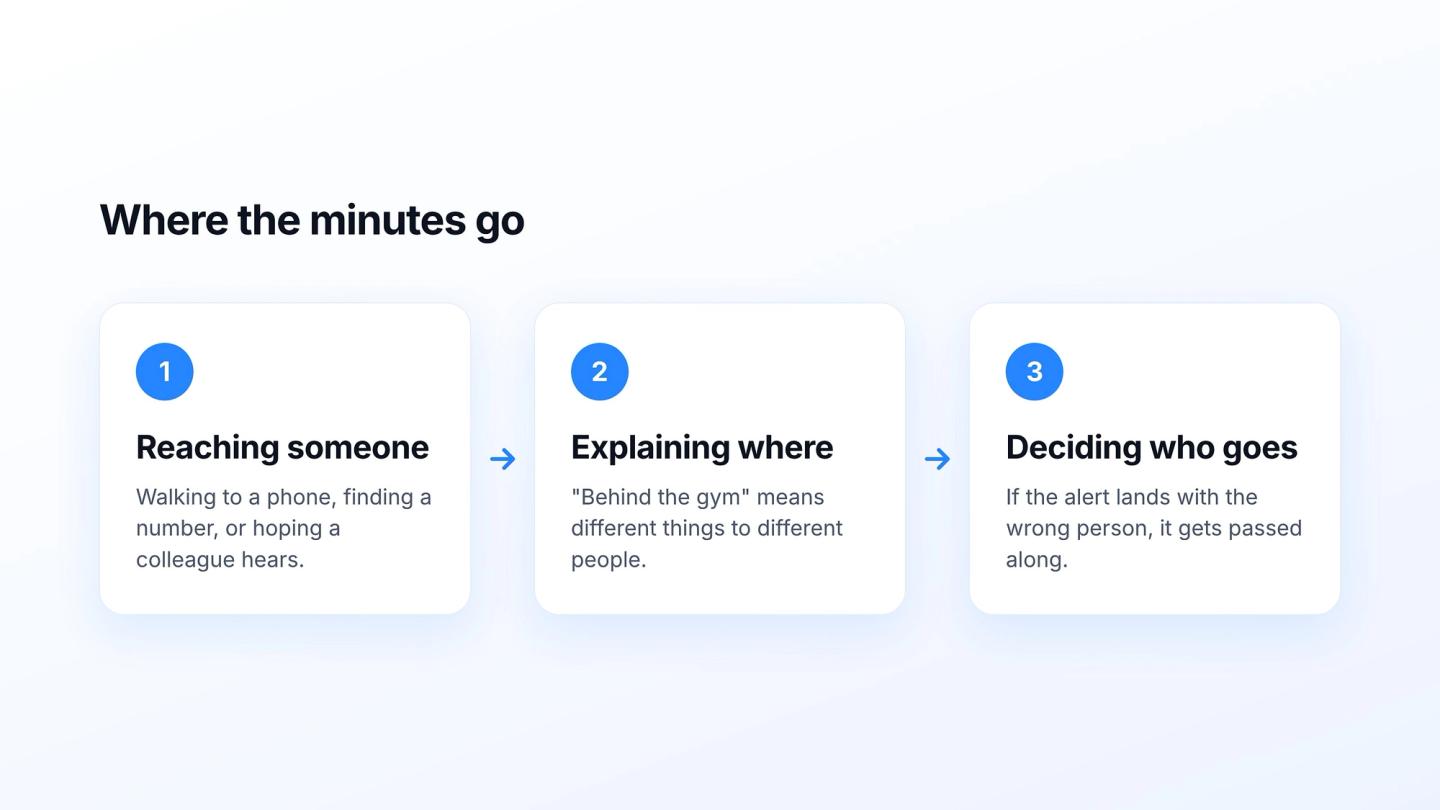
When a staff member needs help, delays can come from three places:
- Reaching someone. Walking to a phone, finding a number, or hoping a colleague hears a shout.
- Explaining where. "Behind the gym" or "the east stairs" means different things to different people, especially on a large or unfamiliar campus.
- Deciding who goes. Front office, security, a nurse, an administrator: if the alert lands with the wrong person, it gets passed along.
In a true emergency, follow your emergency plan first. What a campus team can control is who on site hears about it and whether they arrive knowing the location.
How VOLT fits
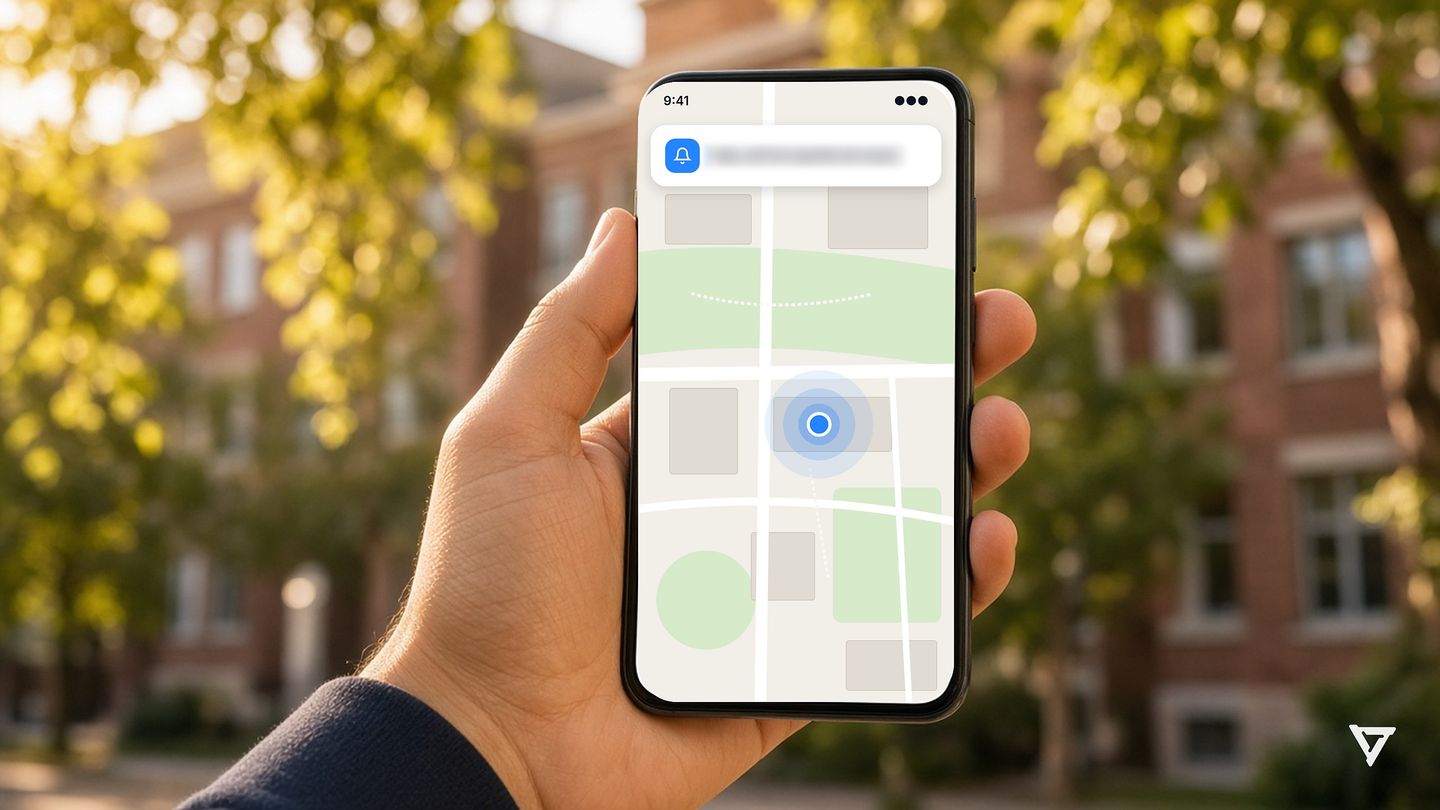
VOLT works with existing IP cameras. Staff can call for help from their own device.
The same system covers moments that tend to come before someone needs help: a possible fight in a hallway or at a bus loop, and a person on campus after hours. Your team sets the areas and hours that matter.
The same cameras can cover serious moments too: VOLT detects possible handguns, long guns, and knives visible to the camera. A VOLT reviewer checks a moment by default before staff are notified.
VOLT doesn't replace your emergency plan, a school nurse or the staff on your campus who know first aid. It can help the people already responsible for a moment hear about it and get there knowing where to go.
Questions to bring to your own team
- Who can call for help today, and how? Can a teacher on a field, a custodian at night, or a front-desk worker ask quietly without leaving the person who needs help?
- Where does the call land? Name the people who receive it during school hours, after hours and on weekends.
- How is the location described? Do responders use the same names for buildings, doors and outdoor areas?
- Who practices it? Napa planned drills. When did your staff last rehearse a help call from start to finish?
- What happens after?
The takeaway
Help calls on a campus aren't always dramatic. Some are a person who needs another adult in a specific place. The teams that handle them well have decided ahead of time how staff ask, who hears it and how location is shared. Start with those three answers, then choose tools that fit them.